

Agentic demos: what are they and how do they work?

Traditional product demos no longer align with how users want to discover software. Requesting a demo call, waiting for availability, and sitting through a generic presentation creates friction and slows down the buying decision. Agentic demos have emerged from this shift in user expectations as a new approach to showcasing products powered by artificial intelligence.
In this article, we’ll explore what an agentic demo is, how it works, and why it’s becoming a cornerstone of marketing and sales strategies for modern SaaS companies.
What is an agentic demo?
An agentic demo is an autonomous, AI-powered product demonstration that adapts in real-time to each individual user. Instead of following a rigid script, the demo understands who the visitor is and what they are looking for. This allows it to showcase the product in a personalized way without the need to schedule a call or interact with a sales representative.
The core of an agentic demo lies in the use of AI agents. These agents can ask questions, interpret user responses, and decide what to show next based on the user's specific context and goals. As a result, two people visiting the same website can experience completely different demos, even though the product remains the same.
This type of product demo offers an experience similar to a live conversation but with the scalability and availability of an on-demand demo. They are available 24/7, reducing friction in the buying journey and allowing SaaS companies to educate and qualify prospects more efficiently. Furthermore, they can operate in multiple languages by adapting the message and experience for users in different markets without doubling the sales effort.

Traditional demos vs. Agentic demos
Traditional product demos, whether live or pre-recorded, have dominated the SaaS sales process for years. The problem with traditional demos is that they carry structural issues: they depend on a salesperson’s schedule, follow a rigid script, and rarely connect with what each specific user needs to see. They are effective, but not efficient.
In contrast, agentic demos eliminate these structural bottlenecks. Thanks to AI agents, they personalize the experience in real time and offer journeys that are more relevant, interactive, and scalable.
Put simply, the differences between traditional product demos and agentic demos are as follows:
| Feature | Traditional demo | Agentic demo |
|---|---|---|
| Personalization | Limited: follows a fixed script that is generic for all users. | High: adapts in real time to the user's profile, interests, and needs. |
| Availability | Only during scheduled hours with a sales representative. | 24/7: available on demand without human intervention. |
| Interaction | Responds only to what the sales rep can address, limited in scope. | Interactive: the AI agent guides, answers questions, and adjusts the demo dynamically. |
| Scalability | Depends on sales resources; difficult to serve many prospects simultaneously. | High: can handle multiple users at the same time without overwhelming the team. |
| Multilingual adaptation | Requires manual translation or multiple versions of the demo. | Automatic: adapts to different languages based on the user. |
| Implementation time | Fast for recorded demos; longer for live demos. | Requires initial setup, but is subsequently scalable and reusable. |
| Sales efficiency | Lower: each demo requires human time and coordination. | Higher: qualifies leads and educates prospects without constant intervention. |
➡️ Discover the differences between agentic demos and interactive demos.
How does an agentic demo work?
An agentic demo works by combining Large Language Models (LLMs) with a deep understanding of your product's user interface. Instead of following a linear script, the agent navigates through your software in real time based on the user's specific intent.
Step 1: Contextual product mapping
The process begins with detailed mapping of your software, identifying key interface elements, workflows, and the most important value propositions. This "knowledge base" allows the demo to decide which features to show and how to guide the user to achieve their goals clearly and efficiently.
Thanks to this mapping, the demo can adapt the journey to the user's needs. From the very first moment, it offers a personalized and relevant experience that maximizes product understanding.
Step 2: Defining the agent's mission
At this stage, the rules and boundaries for the agent's actions during the demo are established. The communication tone, the personality of the experience, and how it should guide the user are defined, ensuring that explanations are clear and consistent with the brand.
Unlike a traditional demo, the journey is not pre-established because the users themselves decide what they want to see and explore. The agent adapts to their decisions in real time, showcasing the most relevant features and providing guidance so the user can discover the product in a personalized way.
Step 3: Natural language interaction
When a visitor arrives at your website and clicks the demo button, an interactive video call starts automatically. In this call, the agents act as virtual guides, ready to receive and respond to user questions or requests in real time. The video call automatically adapts to the user's language, allowing people from different countries to interact with the demo naturally and without linguistic barriers.
Visitors can express themselves in natural language, saying things like: "Show me how your platform generates monthly reports" or "Show me how to set up integrations automatically." The agents interpret these requests and adjust the demo on the fly, highlighting the most relevant functions and guiding the user step-by-step.
During the video call, agents can navigate the live application, fill out sample forms, demonstrate workflows, or highlight key features based on the user's intent. The conversation continuously adapts if the user dives deeper into a topic or changes their objective. The agents reorganize the demo to provide a coherent and personalized experience.
Step 4: Data capture and lead qualification
As the user interacts with the agent during the video call, data is collected regarding their behavior, decisions, and areas of interest. This includes, for example, which features they explore most, how much time they spend on each section, what questions they ask, and at what point they request more information. All of this data allows for a better understanding of each prospect's needs and priorities.
Furthermore, the generated data can be automatically integrated with your CRM, such as HubSpot. This provides your sales team with full context about the user before following up. In other words, they know which features interest them, what doubts they raised, and what goals they are looking to achieve. With this information, the team can personalize subsequent conversations, prioritize high-intent leads, and improve the efficiency of the sales process.
When does it make sense to implement an agentic demo?
Not every company needs agentic demos, but in certain situations, they can make a massive difference. An agentic demo provides the most value when the goal is to offer personalized experiences to every prospect, reduce dependence on sales calls, and help users understand the product quickly.
Below, we analyze the scenarios where implementing agentic demos makes the most sense:
- High lead volumes: when you receive hundreds or thousands of demo requests, it is impossible to handle them all personally. An agentic demo scales without limits since it can serve multiple prospects simultaneously.
- Highly complex products: if your product has many features, integrations, or use cases, a generic demo won't work. The agentic demo detects the user's context and shows only what is relevant to their situation, avoiding information overload and accelerating product understanding.
- Long sales cycles: in enterprise sales, maintaining prospect interest over weeks or months is a challenge. Agentic demos allow users to explore the product at their own pace, consult specific features whenever they need to, and move forward in their evaluation without depending on the sales team's availability.
- International market expansion: scaling to new countries involves barriers such as language, time zones, and cultural differences. An agentic demo can operate 24/7 in multiple languages, adapting to local needs without the need to hire sales teams in every region.
- Optimization of sales resources: sales representatives spend significant time on demos that do not convert. With an agentic demo, low-quality leads are filtered automatically, ensuring the sales team only steps in for prospects who are truly interested and well-educated about the product.
One point to keep in mind is that while an agentic demo can improve the prospect experience and facilitate product understanding, it does not replace human interaction. Sales representatives remain essential for closing deals, addressing complex needs, and building trust. The agentic demo complements the team, allowing them to focus on strategic tasks while prospects receive a guided, personalized experience available at any time.
➡️ Read our dedicated article on what questions should you ask during an agentic AI product demo?.
Karumi.ai: the world’s first agentic demo platform
Karumi is the first platform designed to create agentic demos, offering every prospect a fully autonomous and personalized experience that allows them to discover your product in real time.
With Karumi, every visitor receives a unique, guided demo that highlights the most relevant features and answers their questions instantly. This enables you to educate, capture, and qualify leads at scale, optimizing your sales process and improving the prospect experience.
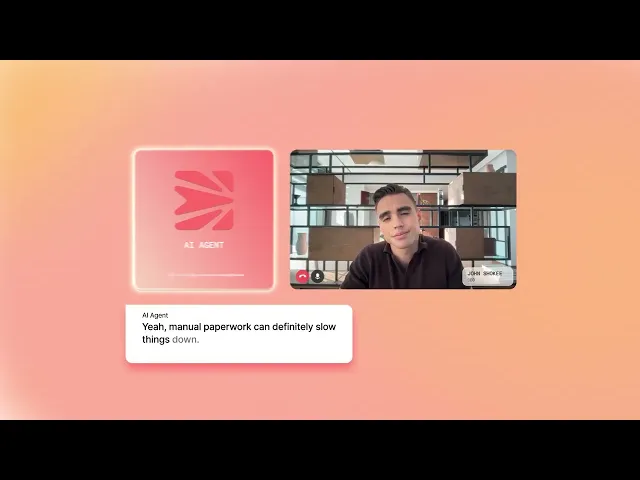
Want to see it in action? Schedule a demo with us and discover how Karumi can transform the way your prospects discover your product.
