

The 7 best demo software for SaaS products in 2026

Short answer
The 7 best demo software for SaaS products in 2026 are Karumi, Storylane, Arcade, Saleo, Demoboost, Walnut and Demostack. Karumi is the pick if you want an AI agent that joins the buyer on a video call and demos your real product live.
There is a recurring pattern across almost all B2B GTM teams. Sales engineers spend more hours setting up demo environments and fixing data than actually sitting in front of real accounts. Meanwhile, high intent prospects go cold while waiting for an open slot on the calendar.
Demo software was created to solve this problem, but not all tools tackle the same part of the equation. Some speed up tour production, others clone the environment so the SE does not have to rely on production, and a new category called agentic demos puts an agent in charge of guiding the product walkthrough without anyone needing to be present.
These are the seven most prominent options in 2026, along with their strengths, their real differences, and the areas where each one falls short.
Comparison table: the best demo software for SaaS
| Software | Demo format | What the AI agent does | Runs on the live product | Multilingual | Security |
|---|---|---|---|---|---|
| Karumi | Agentic demo via video call | Navigates the real product, reasons, and holds a two-way conversation with the prospect in real time | Yes ✅ | Native | SOC 2, GDPR, ISO 27001 |
| Storylane | Captured tour (screenshot, video, HTML) | Lily AI (beta) answers questions layered on top of a captured tour; RepX qualifies inbound visitors | No ❌ | AI-assisted, 25+ languages | SOC 2 Type II, GDPR |
| Arcade | Recorded tour with interactive layers | No prospect-facing agent; AI handles voiceovers, copy, and translations | No ❌ | AI-assisted translations | SOC 2, GDPR |
| Saleo | Live demo with data injection | AI Demo Agent (beta) runs autonomous demos with co-browsing on the native product | Yes ✅ | Multilingual | SOC 2, GDPR |
| Demoboost | Six formats in one platform | No autonomous agent; AI (2025) assists with demo creation only | No ❌ | Per-tour localization | ISO 27001, GDPR |
| Walnut | HTML-cloned demo | Several AI agents that build, edit, and translate demos, none that present live | No ❌ | TranslationAI, 25+ languages | SOC 2 Type II, GDPR, CCPA |
| Demostack | High-fidelity cloned simulation | Builder Agent and Demo Partner (June 2026, early stage) run on the cloned environment | On a clone ⚠️ | Multilingual | SOC 2 Type II, GDPR |
1. Karumi
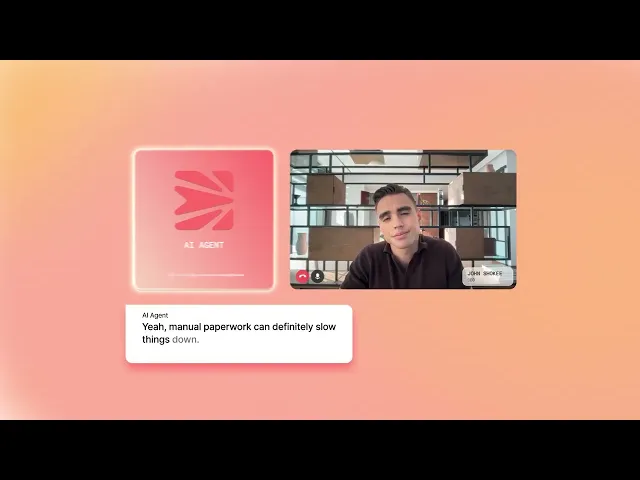
Best for: Sales and marketing teams that want their prospects to jump into the product at their moment of highest intent, without waiting for a sales engineer to have a free slot.
Karumi is the platform that defined the agentic demos category. Instead of showing recorded screens or a product clone, it puts an AI agent in charge of operating the real software during a video call. The agent opens views, executes actions, and reasons about what is on the screen to decide what to show next, just like a human sales engineer would do.
The difference compared to an interactive tour is the type of experience. The prospect does not follow a predefined track. Instead, they have a conversation. They ask about their specific use case, change the subject, or ask to see something unexpected, and the agent adapts on the fly. It is designed for SaaS products with a certain level of functional complexity, where a sequence of screenshots falls short of conveying the real value.
Key highlights
- AI agent on video calls: An agent leads the live demo, navigates the product features, and answers questions just like a sales rep would.
- 24/7 Availability: Prospects can launch their demo whenever they want, without having to coordinate schedules with the sales team.
- Hyperpersonalization: The agent adjusts what it shows and how it explains it based on the profile, industry, and needs of each visitor.
- Native multilingual support: The agent understands and responds in several languages, making it easier to capture leads in any market.
- Real time conversation: The visitor asks questions, changes the topic, or requests to see something specific, and the agent reacts instantly.
- Built in lead qualification: While guiding the demo, the agent gathers signals about the prospect's behavior and purchase intent.
- CRM integration: Data from each session automatically syncs with tools like Salesforce or HubSpot.
- Automatic updates: The demo always reflects the latest version of the product, without needing to recreate content after every release.
- Access control: It allows you to define roles and permissions so that each person only sees the information relevant to them.
- Security and compliance: It meets standards like SOC 2, GDPR, and ISO 27001 to pass demanding purchasing processes.
What sets it apart
The question that sets Karumi apart from the rest of the list is not whether it uses AI, but where that AI runs. In other tools, the agent lives on top of a screenshot, an HTML clone, or a recording, so it runs out of answers as soon as the prospect goes off script.
In Karumi, the agent operates the real product, meaning it can react to impromptu requests just like a person would. For teams looking to scale their demos without multiplying their presales headcount, that distinction completely changes the outcome.
Limitations
- Because it is a new category, some teams need time to understand how it differs from a traditional interactive demo.
- The value is more noticeable when the product has a certain degree of functional complexity.
- Since it operates in the browser, it requires the application to be accessible this way.
2. Storylane
Best for: B2B marketing teams that need to produce many interactive demos quickly and distribute them across landing pages, emails, and sales enablement materials.
Storylane is a no code platform for creating interactive demos and guided tours in a matter of minutes. Its model is based on capturing the product and building a walkthrough from there, which visitors explore on their own. It is organized into three main products. First, Demos, which includes tours and sandboxes. Second, Hubs, which are deal rooms that group materials under a single link. Third, RepX, an inbound qualification agent. Lily, their conversational agent, is a release still in beta and far from the maturity of more established agents.
Key features
- No code creation with three capture modes: Screenshot, video, and HTML, to cover different fidelity levels depending on what each case requires.
- Custom Hubs: Deal rooms that gather demos, videos, and sales materials into a single link per account.
- AI tones: The AI rewrites tour texts in the chosen register, whether technical, conversational, or executive.
- Lily AI (beta): Answers questions within the tour and recommends the most relevant demo for each visitor.
- RepX: Qualifies anonymous website visitors and routes them or books meetings with the sales team.
- Flexible distribution: Tours can be shared via link or embedded into websites, emails, and campaigns.
- Sandbox demos: Stable product environments for live calls and proofs of concept.
- Enterprise security: SOC 2 Type II certification, GDPR compliance, and SSO availability.
What sets it apart
Production speed. A product marketer can capture their product flow and have a tour ready to share in minutes. For marketing teams that constantly publish demos on landing pages, email campaigns, and enablement content, this agility is their biggest advantage over platforms that are heavier to set up.
Limitations
- Demos based on captures require constant maintenance every time the product interface changes.
- Their agentic approach is still very green. Lily remains in beta and operates like a Q&A chat on top of an already recorded tour.
- The most powerful features are reserved for higher tier plans.
3. Arcade
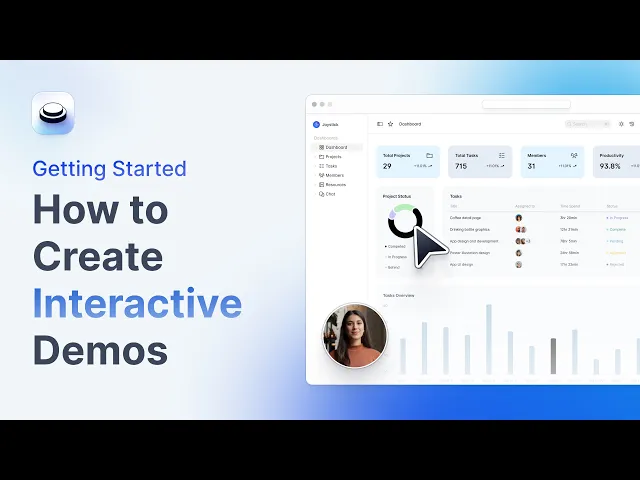
Best for: Product marketing teams that need to produce visual product content at high speed for websites, social media, email, and onboarding.
Arcade positions itself more as a product storytelling tool than a traditional interactive demo platform. Everything about it is designed to generate content with a brand campaign finish, not a support article feel. Its most characteristic feature is the ability to turn a single recording into several formats at once, including an interactive demo, a product video, a GIF, and social media assets.
Key features
- Three capture methods: A Chrome extension for web apps, a desktop app for native software, and a Figma plugin to turn designs into demos.
- Creator Studio with AI: From a single recording, it generates interactive demos, videos with zooms and transitions, and visual assets for social media.
- AI Voiceover and translations: It creates narrations in multiple languages and automatic chapters that divide the demo into navigable sections.
- HTML capture: It replicates the product front end for more faithful demos compared to screenshot based ones, complete with real interactivity.
- Multichannel distribution: Demos can be embedded into websites, shared via link, integrated into emails, or exported as GIFs and MP4s.
- Engagement analytics: Metrics for clicks, session time, drop off points, and completion rates per demo.
- Integrations: Connection with HubSpot, Zapier, and top embedding destinations like websites, Notion, or help centers.
- Security: SOC 2 and GDPR compliance.
What sets it apart
The combination of production speed and variety of output formats. A product marketer records their product flow just once and gets an interactive demo, a LinkedIn video, a GIF for an email, and a visual piece for social media, all from the same platform.
Limitations
- HTML capture is only available starting from the Growth plan.
- The analytics fall short for sales teams that need to read the intent of each account.
- There are no autonomous agents or real time interactions with the prospect.
4. Saleo
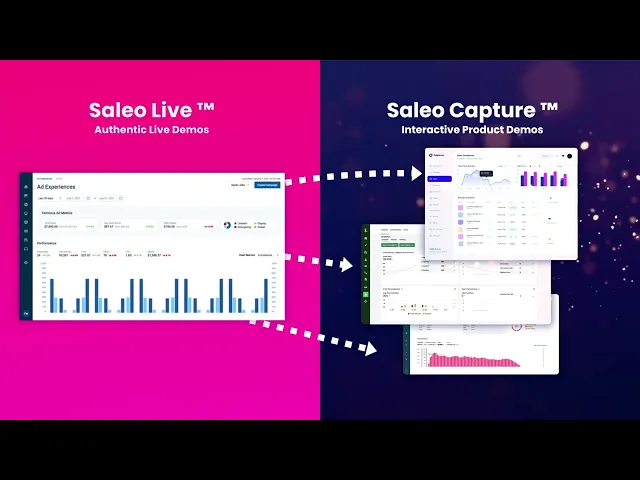
Best for: Presales and sales engineering teams that do live demos on their native product and need to inject custom data for each vertical without setting up parallel environments.
Saleo approaches the demo from a different angle than the rest of the list. Instead of capturing screens or cloning the interface, it injects custom demo data directly into the client's native product. This allows the sales engineer to show the real application, but filled with graphs, tables, and metrics tailored to each case, without touching the production environment. In January 2026, it added its AI Demo Agent, a conversational agent with co browsing that delivers autonomous demos 24 hours a day.
Key features
- Saleo Live: Injects editable data onto the native product for live demos with realistic and customized figures.
- Saleo Capture: Creates on demand interactive tours to support the deal and post call follow ups.
- AI Demo Agent: A conversational agent with real co browsing that delivers autonomous demos 24 hours a day, still in an early beta phase.
- Data Creation Agent: Automatically generates contextual datasets by use case, persona, or vertical.
- No code personalization: Adjusts what is shown for each profile without relying on engineering.
- Demo analytics: Tracks questions, objections, and intent signals throughout the session.
- Security and compliance: Meets standards like SOC 2 and GDPR.
What sets it apart
The injection of data into the native product. While most platforms show a copy or a recording, Saleo operates on the client's actual application and fills it with custom data in every demo. For a sales engineer, that means telling a hyperpersonalized story without the risk of a production environment or the cost of maintaining separate demo instances.
Limitations
- Its agentic layer is still unpolished, as the AI Demo Agent was launched in January 2026.
- Deployment is slow and usually requires weeks of implementation before the first demo.
- Many tasks are not self service and rely on the Saleo support team.
5. Demoboost
Best for: Presales teams that sell complex software and need different demo formats, from self guided tours to live overlays, throughout the entire sales cycle.
Demoboost turns real product flows into interactive demos that the team can build without writing code. Its approach is to cover every moment of the deal with the right format. This includes a self guided tour for the first contact, a sandbox for the buyer to play around with on their own, and an overlay to personalize the product mid call. The AI features it added in 2025 speed up the creation of these materials, but its role is limited to building the demo and does not go as far as driving it autonomously in front of the prospect.
Key features
- Multiformat: Combines HTML tours, sandboxes, live overlays, mobile demos, and video in a single platform.
- Interactive sandboxes: Controlled environments where the prospect explores features at their own pace and without risk.
- Live Demo Overlay: Adjusts the real product during the call to fit the buyer's context.
- Digital Sales Rooms: Spaces that group deal content together and help identify the decision makers involved.
- Behavioral analytics: Metrics on engagement, pathways, and stakeholders to prioritize opportunities.
- Flexible distribution: Demos are shared via link, embedded on the web, or integrated into sales rooms.
- GTM integrations: Connects with Salesforce, HubSpot, and analytics and marketing tools.
- European security: Data hosted in the EU with ISO 27001 certification and GDPR compliance.
What sets it apart
The ability to cover the entire funnel with different formats from the same account. Instead of forcing the team to jump between tools depending on the deal phase, Demoboost brings tours, sandboxes, and overlays under one roof. This is especially useful for presales teams that manage long processes with multiple decision makers.
Limitations
- It does not have an autonomous agent, as its AI stops at demo creation.
- Onboarding is demanding and the first demo can take weeks to be ready.
- Several users report slow load times and unstable behavior during demos.
6. Walnut
Best for: Enterprise sales teams that customize each demo prospect by prospect and want to change logos, data, and features without going through engineering.
Walnut clones the front end of the product as interactive HTML and lets the sales team edit texts, data, and visible elements for each account. In 2026, it shifted its narrative towards a suite of various AI agents designed to speed up demo creation, not demo delivery.
Key features
- HTML cloning: A navigable replica of the real product, more faithful than demos based on static captures.
- AI Mode: Generates a complete demo from a natural language description.
- StoryCaptureAI: Turns a narrated product recording into an editable demo.
- TranslationAI: Translates a tour into over 25 languages without having to record it again.
- InsightsAI: Cross references demo engagement with CRM data to attribute pipeline.
- Profile personalization: Swaps logos, names, and datasets to adapt the demo to each prospect.
- GTM integrations: Connects with leading CRMs and marketing automation platforms.
- Enterprise security: Complies with SOC 2 Type II, GDPR, and CCPA, featuring SSO and role based access control.
What sets it apart
The density of AI applied to creation. While a large part of the competition tries to stand out with agents that converse with the prospect, Walnut focuses theirs on speeding up the builder's work. It is a clear bet on scaling the production of personalized demos within the team itself, rather than replacing the sales rep in the conversation.
Limitations
- Its AI agents work for whoever builds the demo, they do not present it live to the prospect.
- Every change in the product requires recapturing parts of the demo so it does not become outdated.
- Products with a lot of dynamic content or heavy JavaScript do not clone cleanly.
7. Demostack
Best for: Enterprise sales teams with technically complex products that need a high fidelity and stable cloned demo environment, without touching production.
Demostack clones the entire product and generates a functional replica that the sales team can customize and present without the risk of bugs or relying on the real environment. In June 2026, it entered the agentic space with two launches. First, Builder Agent, which edits the simulation from natural language instructions. Second, Demo Partner, which drives demos autonomously. Both are very recent and their maturity is not yet comparable to agents with more time in production.
Key features
- Complete cloning: Replicates the entire product from a single walkthrough of the real application.
- Interactive sandboxes: Controlled environments where the prospect explores features at their own pace.
- No code editing: Adjusts texts, data, graphs, and workflows without touching the back end.
- Live overlays: Personalizes the product during sales calls.
- Builder Agent: Modifies the simulation from natural language instructions, launched in June 2026.
- Demo Partner: An agent that delivers autonomous demos, also launched in June 2026.
- Enterprise security: Meets standards like SOC 2 and GDPR.
What sets it apart
The fidelity of the cloned environment. Compared to platforms that work with partial captures or screenshots, Demostack generates a complete replica that preserves the real logic and flows of the product.
Limitations
- Its agentic layer was just born, as Builder Agent and Demo Partner were launched in June 2026.
- The agents operate on the cloned simulation, not on the live product.
- Implementation is heavy and users report relying on support for advanced testing.
