

Interactive demos: what they are, benefits and examples

Interactive demos have become one of the most effective tools for showcasing a digital product without forcing users to go through a registration process, a sales call, or a lengthy onboarding sequence. In a landscape where B2B buyers conduct their own research and seek immediate answers, these types of demos allow them to explore the product interactively.
Unlike traditional demos, interactive demos place the user at the center of the experience. Instead of just observing the product, they actually test it and interact with it. Through guided tours or free exploration, potential customers can discover key features, visualize real world use cases and determine if the tool fits their needs.
In this article, we’ll explain what interactive demos are, their main benefits, and practical examples of how to use them in SaaS and B2B environments.
What is an interactive demo?
An interactive demo is a simulated version of a digital product that allows users to interact with its interface and core features without needing to install software or create an account. Instead of merely watching how the product works, users can actively explore it by following key workflows and experiencing its value firsthand in a safe and controlled environment.
Interactive demos are designed to be hands on and user centric. They can offer guided tours that highlight specific use cases or allow for self directed exploration tailored to each person’s role and needs. This makes them exceptionally effective for complex SaaS products where value is best understood through direct experience.
By allowing potential customers to test drive the product before committing, interactive demos reduce friction in the buying process, shorten time to value and qualify leads more effectively than traditional methods. This approach is a natural evolution of the standard product demo and offers a more engaging experience. Today, these types of product demos are widely used in B2B SaaS and Product Led Growth strategies to educate and convert users.
Benefits of interactive demos
Interactive demos offer many advantages for both users and companies. They allow users to test the product in a practical way and quickly demonstrate its value, making the experience clearer, more engaging and more effective.
The following are the main benefits of interactive demos:
- Hands on product experience: it allows users to explore core features and understand the real value of the product through direct interaction.
- Reduced buying friction: prospects move faster through the sales funnel without complicated registrations or initial calls.
- Increased engagement: interactivity and user control increase attention and information retention.
- Accelerated time to value: users quickly see how the product solves their specific problems.
- Effective lead qualification: it identifies high intention prospects who are genuinely interested in the solution.
- Scalable sales and marketing: it allows the company to serve thousands of prospects simultaneously without constant manual intervention.
- Personalized use cases: it adapts the experience to specific roles or needs by showing only what is relevant to each user.
- Data driven insights: It provides analytics on how prospects interact to optimize marketing and development efforts.
How do interactive product demos work?
Interactive demos work by guiding the user through a hands on journey of the product. This way prospects can explore key features and experience its value directly. Each interaction is designed to show how the product solves real world problems that prospects face every day.
The following section explains how this interaction flow develops, what phases the user goes through and how each step contributes to understanding the product value in a clear and effective way.
Step 1: Demo setup
The first step is the configuration of the interactive demo which defines how users will experience the product. In this phase, the product or marketing team selects the key features to be showcased, decides if the journey will be guided or allow for free exploration and determines if the demo will be personalized according to the role or needs of the user.
Technical aspects are also established such as the simulation of real data, the interactivity of buttons and flows and the messages or contextual help that will guide the user. A good setup ensures the demo is clear, attractive and easy to follow, allowing prospects to quickly understand the product value from the very first contact.
Step 2: User interaction
Once the demo is configured, the user begins to interact directly with the product by performing real actions such as clicking, completing tasks or following an initial guided tour. This first contact is designed to orient the user, facilitate the understanding of the interface and show the most relevant features without creating information overload.
As they progress, the user gains more autonomy to explore and navigate the product at their own pace. At the same time, the demo adapts dynamically to their actions and decisions, showing contextual messages, flows and use cases aligned with their interests. This combination of guided interaction, free exploration and personalized adaptation reinforces the perception of value and demonstrates how the product fits into a real world context.
Step 3: Data collection and analysis
During the interaction with the demo, data is collected regarding user behavior such as clicks, sections explored or the time spent on each step. This information allows for an understanding of how prospects interact with the product and which features generate the most interest.
The analysis of this data helps optimize the demo and the business strategy by identifying friction points, improving journeys and better aligning messages with the real needs of the user. In this way, every interaction becomes a source of valuable insights for marketing, sales and product teams.
➡️ Read our dedicated article on the best interactive demo software.
When does it make sense to implement an interactive demo?
Implementing an interactive demo is not necessary for every product, but in certain cases, it can make a significant difference in sales and onboarding processes. Its effectiveness depends on product complexity, user autonomy and marketing and sales objectives.
The following are the scenarios where implementing an interactive demo makes the most sense:
- Complex products: if your product has multiple features, integrations or use cases, a video or generic demo is not enough. Interactive demos allow users to test exactly what they need while avoiding information overload.
- Users who want to try before they buy: in self serve or digital B2B environments, prospects look for hands on experiences before signing up or speaking with sales. An interactive demo allows them to experience value immediately and autonomously.
- Long sales cycles: maintaining prospect interest over weeks or months can be difficult. Interactive demos allow users to explore the product at their own pace without depending on a sales team.
- Onboarding optimization: when users get lost in the first steps or activation is slow, an interactive demo reduces friction, facilitates product understanding and accelerates adoption.
- Marketing and sales scalability: small teams or international growth processes benefit from demos that work 24/7 and can serve many prospects simultaneously without manual intervention.
- Reduction of sales costs and resources: by educating the user and filtering leads automatically, interactive demos ensure that the sales team only intervenes with prospects who are truly interested and ready for the next phase.
Agentic demos: the evolution of interactive demos
If interactive demos transformed product marketing by allowing the user to "test drive" the software, agentic demos represent the next evolutionary leap. It is no longer just about clicking through predefined flows. Instead, it is about interacting with an interface that thinks, acts and responds autonomously. At Karumi, we lead this innovation by helping companies build and deploy these intelligent agents to transform their sales and product experiences
Agentic demos combine advanced artificial intelligence with large language models (LLMs) to create a completely interactive and personalized experience. They function like a simulated video call where the user can ask any question about the product and the AI responds in real time by guiding them and explaining each feature according to their needs.
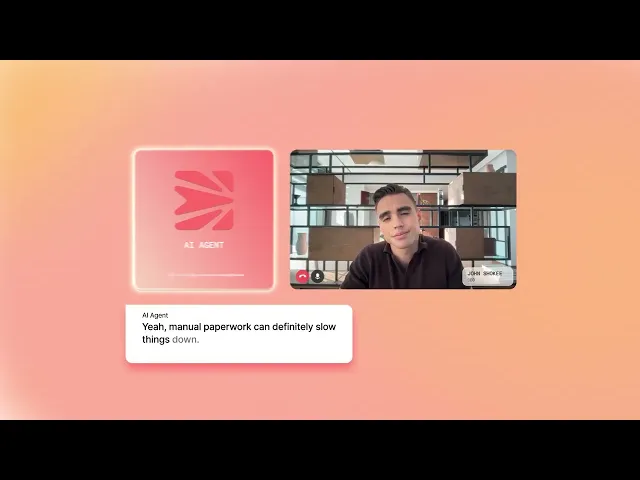
At the same time, the demo shows live how each action is performed within the software. This way, the user does not just listen to the explanation but sees step by step how it is applied in the product. This turns the experience into something much more dynamic and similar to an interaction with a human expert while remaining scalable and available on demand.
| Feature | Interactive Demo | Agentic Demo |
|---|---|---|
| Interaction level | The user explores the product by following guided or free flows. | The AI interacts proactively with the user while answering questions and guiding in real time. |
| Personalization | Limited to predefined journeys or specific roles. | High as the AI adapts the experience to user needs, context and questions in real time. |
| Technology | Based on simulation software or standard interactive demos. | Based on AI agents, LLMs and real time processing. |
| Product presentation | The user navigates and tests features on their own. | The AI shows how to perform actions in the software while answering user questions much like a video call with an expert. |
| Scalability | Scalable but limited to the predefined experience. | Highly scalable as it can serve multiple users in a personalized and autonomous way. |
| Main objective | For the user to explore and discover product value. | For the user to learn, understand and feel guided by an intelligent assistant while accelerating the buying decision. |
| 2026 trend | A tool already established in SaaS and B2B. | Considered the next big trend especially for complex products and product led growth strategies. |
➡️ Discover the differences between agentic demos and interactive demos.
Real world examples: why agentic demos are replacing interactive demos
Although interactive demos marked a before and after, there are complex scenarios where they fall short. Here we show you where agentic demos make the ultimate difference.
Example 1: Marketing automation platform (B2B SaaS)
➡️Example with an interactive demo:
Imagine a potential customer wants to explore a tool for creating lead nurturing campaigns. With a traditional interactive demo, the user follows a guided path by clicking buttons that say “Create your campaign here.” Each step leads them to predefined templates and fictional fields they must complete in a linear way.
The problem arises when the user wants to test more specific scenarios. How would it integrate with their current CRM? How would a custom trigger that is not included in the demo work? In those cases, the experience stops and shows messages like “feature not available in preview mode.”
The result is that the user understands the interface but cannot evaluate if the tool adapts to the complexity of their own strategy. The interactive demo fulfills its basic function but does not offer the flexibility or personalization needed to make a real buying decision.
➡️Example with an agentic demo:
With agentic demos, the experience is completely transformed. The prospect starts a video call with the AI which acts as an expert assistant within the software. Instead of following predefined steps or browsing menus, the user can ask any question or describe a specific scenario such as “I want to create a welcome flow for the attendees of my last webinar with three emails spaced out every two days and notifications for the sales team if someone clicks on the pricing link.”
The AI responds instantly and shows in real time how the flow is configured on the platform. The prospect does not just see buttons. They observe the software executing complex tasks automatically and understand its power and ease of use without needing to test it manually. This experience eliminates any doubt about how the product can adapt to their own business and accelerates the buying decision.
Example 2: Sales CRM for high scale teams
➡️Example with an interactive demo:
A sales manager wants to see how the tool helps their team prioritize contacts. The interactive demo shows a list of leads with colored stars and asks them to click on a preset filter for “High priority leads.” Upon doing so, the list updates to show only five names. The user sees that the filter works but does not understand the logic behind it or how to replicate it with their own segmentation criteria.
The interactive demo limits the user to predefined steps by showing the interface without allowing them to test their own scenarios or understand how to apply business rules in their real context.
➡️Example with an agentic demo:
In the agentic demo, the experience is completely personalized and guided by an AI agent. The sales manager starts a video call with the intelligent agent and can say “I am a sales manager in the tech sector and I need to identify leads who have interacted with our technical content in the last week but do not have meetings assigned.” The AI understands the role and intent of the user, answers their query and shows them step by step in the interface how to apply the filters and generate the list while explaining each action as it guides the prospect through the process.
If the user presents a new scenario such as “Now show me how to filter only for companies with more than 500 employees,” the AI agent explains and demonstrates step by step in the interface how to apply that filter without the need for preconfigured paths. The key difference is that the prospect observes how the software performs the action and receives personalized guidance which conveys clarity, power and product understanding in real time.
