

The 7 best Consensus alternatives in 2026

In an increasingly competitive SaaS market, delivering an effective demo can be the difference between closing a deal or losing it. While Consensus has become a popular choice for showcasing products and driving engagement, it isn't always the perfect fit for every team's specific needs.
At the same time, B2B buyer expectations have shifted. Today’s buyers look for more dynamic, personalized, and accessible on-demand experiences. This has fueled the rise of platforms that address these new requirements through various innovative approaches.
In this article, we analyze the top 7 Consensus alternatives in 2026, comparing their strengths and use cases to help you choose the best solution for your sales strategy.
Why are users looking for an Consensus alternative?
Although Consensus remains a popular tool, many users are actively searching for alternatives. Limitations in flexibility, interactivity, and cost are driving sales and marketing teams to explore options that better align with their requirements.
- Inefficient maintenance: because the platform relies heavily on pre-recorded videos, any change to your product's UI forces you to re-record and re-edit your demos. In fast-paced SaaS environments with frequent updates, this creates a constant operational burden.
- Limited interactivity: while it allows for some "branching," the experience is still primarily a video. Many buyers today prefer to interact directly with the product and explore it on their own terms.
- High price tag: its enterprise-centric approach comes with steep annual costs. For startups and mid-market companies, this can be an investment that is difficult to justify.
- Complex setup: creating and maintaining "DemoBoards" requires a significant learning curve. It isn’t always the most intuitive tool right out of the box.
- Rigid contracts: renewal terms often require cancellation notices well in advance, which can create unnecessary friction for many customers.
- Basic AI capabilities: while it includes basic AI-driven personalization, it lacks autonomous conversational agents capable of answering prospect questions in real-time within the demo itself.
What are the best Consensus alternatives?
Below, we review the top Consensus alternatives in 2026. Each platform offers a unique approach to creating more interactive, flexible demos tailored to various sales and marketing needs.
| Software | Demo type | AI usage | Real-time interaction | Multilingual support | Security |
|---|---|---|---|---|---|
| Karumi | Agentic demo | High / Autonomous 🧠: AI agent navigates the real interface and reasons in real time. | Yes ✅: The AI agent answers questions and adapts the demo live. | Native & Automatic 🌐: Real-time conversational translation without extra setup | SOC 2, GDPR, ISO 27001 |
| Consensus | Interactive demo | Low ⚙️: AI generates guides, translations, and narrations for content. | No ❌: Content adapts to user choices, but there is no real time AI interaction. | Manual ✍️. Language versions must be created separately. | SOC 2 Type II, GDPR |
| Navattic | Interactive demo | Low ⚙️. AI helps generate content (copy/guides), but no autonomous interaction. | No ❌: Users explore guided flows at their own pace. | Manual ✍️. Localization of demos is required for different languages. | SOC 2 Type II |
| Reprise | Interactive demo | Low ⚙️. Not a core component of the interactive experience. | No ❌: Navigable demos based on cloned interfaces. | Manual ✍️. Demos must be localized separately. | SOC 2 Type II, GDPR |
| Walnut | Interactive demo | Low ⚙️: AI generates guides, translations, and narrations for content. | No ❌: Offers structured step-by-step tours or free exploration. | Manual / Assisted ✍️: AI facilitates translations for guide steps | SOC 2 Type II, GDPR, CCPA |
| Supademo | Interactive demo | Low ⚙️: AI generates guides, translations, and narrations for content. | No ❌: guided navigation without live adaptation. | Manual ✍️: Requires separate demos for localization | SOC 2 Type II |
| Demostack | Interactive demo | Low ⚙️: AI generates guides, translations, and narrations for content. | No ❌: Interaction with predefined sandboxes and flows. | Manual ✍️: Demos must be localized separately | SOC 2 Type II, GDPR, CCPA |
1. Karumi
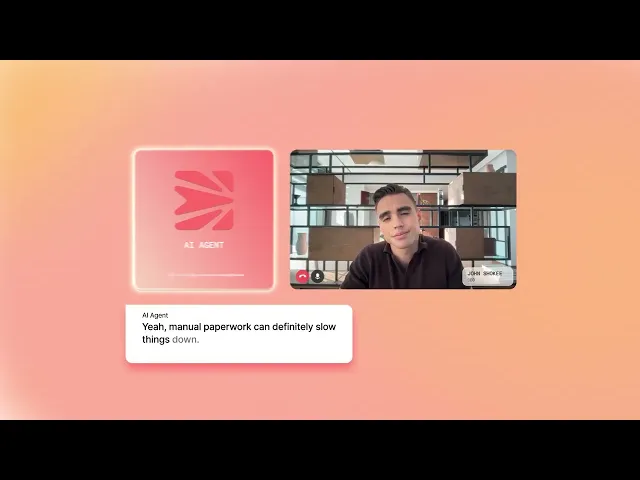
At the forefront of the 2026 demo revolution, Karumi.ai has pioneered the concept of "agentic demos." Unlike conventional tools that are limited to playing back screenshots or predefined click-throughs, Karumi utilizes an autonomous AI agent that understands and navigates the actual software interface in real-time.
This approach transforms the demo from a passive resource into a two-way conversational experience, where the product is capable of explaining itself and immediately adapting to the prospect's questions.
It is the ideal solution for teams looking to scale their sales and marketing operations without relying exclusively on human availability, ensuring every potential customer receives personalized, high-level technical attention.

Key highlights
- Real-time virtual assistant: the AI acts as a sales representative, guiding the user, interacting with the interface, and answering questions or concerns during the demo.
- Available 24/7: prospects can start the demo at any time without being dependent on a salesperson's schedule.
- Automatic updates: the agent detects changes in the software and adjusts the demo automatically, eliminating the need to re-record screens.
- Multilingual: the AI converses fluently in the user's language without the need for manual translations.
- Profile-based Personalization: the flow and messaging adapt according to the user's industry, role, and interests, creating unique experiences.
- Lead qualification: the AI monitors how the prospect interacts during the demo and gauges their interest level, helping to identify the most promising leads.
- CRM integration: data and lead scores sync automatically with tools like Salesforce or HubSpot.
- User access governance: define and control user privileges to ensure that individuals can only interact with the information and tools required for their role.
- Comprehensive action history: automatically record every activity carried out on the platform to support monitoring, compliance, and traceability.
- Enterprise-grade security: complies with international standards such as SOC 2, GDPR, and ISO 27001 to protect data.
➡️ Read our dedicated article comparing Karumi vs. Consensus.
2. Consensus
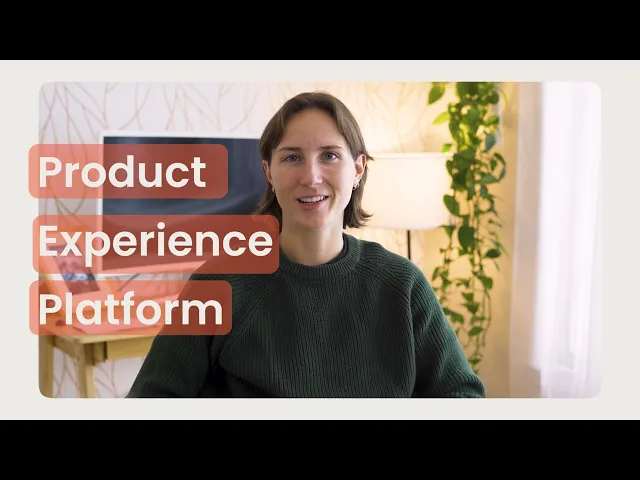
Consensus is an automated demo platform that allows prospects to explore a product on their own, focusing solely on what truly interests them. Each demo adapts dynamically to show relevant content based on the user's role, priorities, and needs, communicating product value without unnecessary filler.
It is designed for sales and presales teams working through complex buying processes with multiple decision-makers. Consensus's personalized, on-demand demos offer a more agile buying experience tailored to each stakeholder.
Key highlights
- No-code demo creation: record real product flows and convert them into step-by-step guides without any programming.
- Persona-based personalization: create different paths within the same demo based on the user type (e.g., marketing vs. sales).
- Full visual editor: edit text, images, and interactive points, and add GIFs, videos, and forms.
- AI-powered content optimization: helps generate guides, create voiceovers, and automatically translate demos into multiple languages.
- Sharing and analytics: distribute demos through various channels (link, email, or web) and analyze user interaction in detail.
- Sales tool integrations: connects with CRMs and automation platforms to sync prospect data.
- Enterprise security: complies with standards like SOC 2 Type II and GDPR to ensure data protection.
3. Navattic
Navattic is a platform that lets you create interactive, no-code demos directly from your browser. It converts real software flows into guided experiences that prospects can explore at their own pace, overcoming the limitations of static videos or screenshots.
It is designed for marketing and sales teams looking to showcase products more dynamically and personally, adapting content to the buyer’s profile and helping to accelerate decision-making.

Key highlights
- No-code demos: create demonstrations by capturing real product screens without depending on developers.
- Reusable templates: quickly build new demos using existing structures and components.
- Automated personalization: tailor the demo with variables like the customer's name or logo to increase relevance.
- Team collaboration: includes tools for multiple members to collaborate on demo creation and management.
- Detailed usage analytics: provides data on clicks, viewing time, and interaction levels to understand what interests users most.
- CRM integrations: connects with sales and automation tools to synchronize prospect data.
- Enterprise security: complies with SOC 2 Type II and GDPR standards.
4. Reprise
Reprise enables the creation of reusable interactive demos without the need for technical support. It clones the product interface to generate navigable demos that feel like the actual software.
Designed for sales and marketing teams, it simplifies editing, updating, and personalizing demos according to the audience and the stage of the sales cycle. It also allows for the addition of interactive elements and offers analytics to improve the prospect experience.

Key highlights
- Faithful product replication: captures the actual interface to offer navigable demos that feel authentic.
- No-code management: vreate, organize, and update entire demo libraries without relying on developers.
- Custom interactivity: sdd hotspots, buttons, and interactive text to guide the prospect dynamically.
- Detailed analytics: provides metrics on user interaction, showing which sections are visited most and the time spent on each feature.
- Team collaboration: shared spaces for multiple members to co-create, review, and manage all company demos.
- Sales funnel integration: cloned demos integrate into the sales funnel, can be shared across multiple channels, and connect to analysis tools to prioritize opportunities.
- Corporate security: SOC 2 Type II and GDPR compliant, ensuring the protection of company and prospect data.
5. Walnut
Walnut is a platform for creating interactive and personalized demos that allow prospects to explore software in a hands-on, autonomous way. It enables sales, marketing, and customer success teams to generate engaging experiences quickly and at scale, without the need for videos or live presentations.
The platform makes it easy to adapt each demo to different user profiles and share them across multiple channels. Additionally, it offers user interaction data to optimize the experience and improve sales process performance.
Key highlights
- Flexible exploration: choose between step-by-step guided tours or free navigation, letting the user decide how to discover the product.
- Persona-based adaptation: adjust text and visual elements based on the viewer's industry, role, or needs to maximize relevance.
- AI for personalization: optimizes and adapts demo elements without needing autonomous agents for live interaction.
- No-code creation: GTM teams can build high-fidelity demos without coding, accelerating the launch of new experiences.
- Strategic analytics: provides data on which sections attract the most attention and where friction exists, helping to prioritize sales efforts.
- GTM ecosystem integration: connects with CRMs and automation platforms so lead data flows seamlessly.
- International security: complies with SOC 2 Type II, GDPR, and CCPA, guaranteeing the protection of corporate and prospect data.
6. Supademo
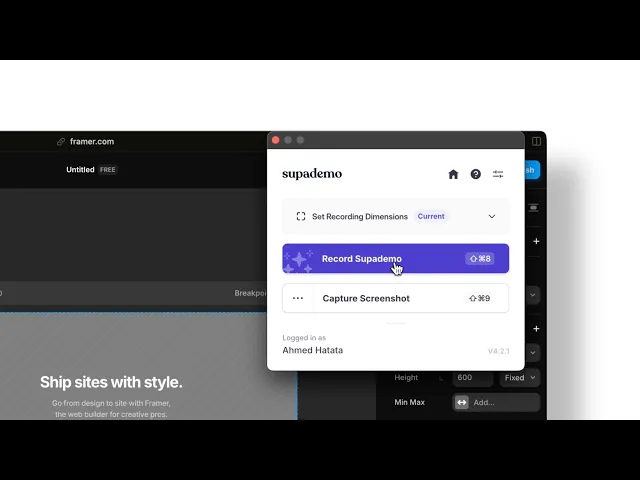
Supademo is a platform that allows you to create interactive demos and product guides in minutes using a browser extension that automatically captures workflows. It converts any software process into a step-by-step experience where the prospect learns by interacting directly with the interface.
It is ideal for quick tutorials, onboarding guides, and marketing assets that faithfully reflect software behavior. It offers hands-on experiences that accelerate product understanding and adoption without relying on live presentations.
Key highlights
- Ultra-fast flow capture: the browser extension transforms any software process into an interactive step-by-step guide almost instantly.
- Flexible output formats: combine HTML, videos, and screenshots to adapt the demo to the most effective functionality.
- Dynamic paths and personalization: supports variables and branching to show content based on the user profile and allow prospects to choose their own path.
- AI for storytelling: sutomates text, voiceovers, and translations, making the same demo accessible in several languages with minimal effort.
- Engagement analytics: provides metrics on completion, interaction, and drop-off points to optimize the user experience.
- Commercial stack integration: connects with CRMs and marketing tools to automatically record lead behavior.
- Corporate security: complies with SOC 2 Type II, GDPR, and CCPA.
7. Demostack
Demostack allows sales and marketing teams to create personalized demos without depending on developers. It offers various formats, such as cloned demos, guided tours, and interactive sandbox environments.
It is designed for companies that want to showcase product value consistently throughout the sales cycle. Teams can create demos tailored to each audience and measure how prospects interact to optimize commercial strategy and improve lead management.
Key highlights
- Autonomy for GTM teams: enables sales and marketing to independently create and deploy high-fidelity demos.
- Advanced environment cloning: replicates the actual software interface or adds interactive layers over the original application for an experience identical to the real product.
- Secure interactive sandboxes: create testing environments where prospects can explore features without risk.
- Impact analytics: offers detailed data on the use and engagement of each demo to optimize business strategy and pipeline management.
- Collaborative demo management: shared spaces for multiple users to co-create, edit, and organize the entire demo library.
- Sales ecosystem integration: connects with CRMs and marketing tools to centralize data and track the actual interest of leads.
- Enterprise security: complies with SOC 2 Type II, GDPR, and CCPA to protect corporate and prospect information.
