

The 6 best interactive demo software in 2026

Interactive demos have become an essential piece of the B2B go to market stack. Buyers want to touch the product before speaking with a sales rep, and marketing and sales teams need scalable ways to show it without booking a call for every lead that lands on the website.
The market has matured in 2026. Classic no code platforms for guided tours using screenshots or HTML have been joined by tools that clone the entire front end. On top of both sits a new layer of AI agents that clear the way for real time conversations, automated qualifying, and in the most advanced cases, autonomous navigation within the actual product.
Below are the 7 tools that best represent this landscape in 2026, what each one does, what sets them apart, and where they lose momentum.
Comparison table: the best interactive demo software
| Software | Capture method | Demo format | AI capabilities | Real-time interaction | Security |
|---|---|---|---|---|---|
| Karumi | Live navigation on the real product | Agentic demo via video call | Autonomous AI agent that navigates, reasons, and adapts in real time | ✅ Conversational AI agent in real time | SOC 2, GDPR, ISO 27001 |
| Storylane | Screenshots, video, HTML capture | Interactive tours, hubs | RepX qualifies and routes, AI assists in creation and translation | ❌ Limited to RepX chat, no live navigation | SOC 2 Type II, GDPR |
| Supademo | HTML capture, screenshots, video, screen recording | Interactive guides, showcases | AI Demo Agent (launched June 2026), voice cloning, MCP integration | ❌ AI Demo Agent runs on top of predefined content | SOC 2 Type II, GDPR, CCPA |
| Saleo | Native product overlay with data injection | Live demo enhancement, AI Demo Agent | AI Demo Agent, Data Creation Agent | ✅ AI Demo Agent for autonomous demos | SOC 2 Type II, GDPR |
| Navattic | High-fidelity HTML capture | Interactive HTML demos, sandboxes | Agent Demos in beta, AI Copilot for creation | ❌ Agent Demos limited to the cloned environment | SOC 2 Type II, GDPR |
| Walnut | HTML capture | Interactive demos, deal rooms | AI Mode for demo generation, TranslationAI | ❌ AI assists in creation only | SOC 2 Type II, GDPR, CCPA |
| HowdyGo | HTML capture | Interactive demos, demo centers, GIF and video export | AI voiceover, annotation generation | ❌ No conversational AI agent | SOC 2, GDPR |
1. Karumi
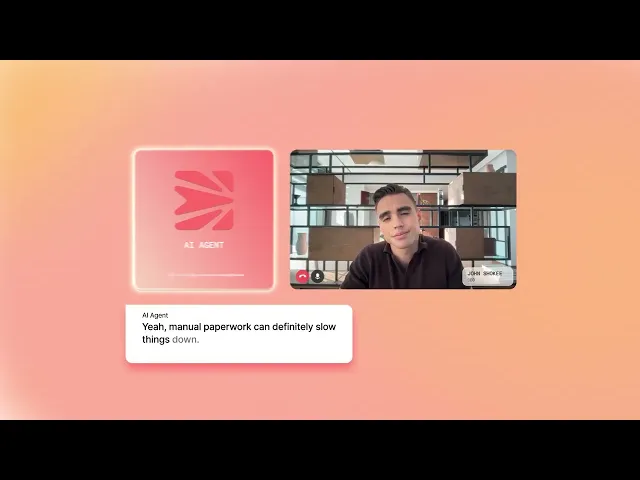
Best for: B2B SaaS teams looking to boost their interactive demo conversions by adding a conversational AI layer that showcases the product on the actual interface rather than on screenshots or preconfigured sandboxes.
Karumi is the only platform on the list that delivers agentic demos via video call, featuring an AI agent that navigates the product live while chatting with the buyer. Unlike interactive tours based on HTML capture or screenshots where the prospect explores an environment frozen in time, the Karumi demo happens right on the product interface and adapts in real time to what the visitor asks.
The platform is geared towards sales and marketing teams looking to scale the defining moment of the buyer journey without having to book a call with a sales rep for every lead that visits the website. The interactive demo stops being a static asset and turns into a conversation.
Key Features
- AI agent via video call: The agent runs the live demo, navigates the product, and answers questions in natural language just like an account executive would.
- 24/7 availability: Any visitor can launch a personalized demo on the spot without waiting for an available sales rep.
- Hyper personalization: The agent tailors the flow, messaging, and use cases to the profile, vertical, and specific needs of each prospect.
- Native multilingual: The conversation and reasoning take place directly in the buyer's language without manually translating the assets.
- Automatic updates: The agent follows the real product, meaning UI or functionality changes will not break the demo.
- Integrated lead qualification: During the conversation, the agent captures intent signals and qualification data that flow directly to the CRM.
- GTM integrations: Direct connection with leading CRMs and marketing automation platforms.
- Security and compliance: SOC 2, GDPR, and ISO 27001 certifications alongside advanced access controls and audit logs.
What Sets It Apart
Karumi is the only platform on the list where the interactive demo takes place on the real product rather than on a capture, video, or preconfigured sandbox. The rest of the tools, including those rolling out AI demo agents over HTML capture, operate within a closed environment where the agent cannot deviate from the captured flow.
With Karumi, the agent navigates freely, answers unscripted questions, and shows the product exactly as the client will see it on their first day logging in.
Limitations
- Since it is a new category, some teams need time to understand how it differs from a traditional interactive demo.
- It fits best with products that have a certain degree of functional complexity, where value is built by walking through various use cases.
- For single screen or highly linear products, a classic interactive demo might be enough.
- Some integrations are still in development.
2. Storylane
Best for: B2B SaaS marketing and demand gen teams looking to combine interactive website demos with a conversational AI agent that qualifies visitors before passing them to the pipeline.
In 2026, Storylane has repositioned itself as an AI native demo automation platform. Their stack consists of Demos (interactive tours over screenshots, video, or HTML capture), Hubs (deal rooms grouping demos, videos, and collateral under a single link), and RepX, their voice and text AI sales agent trained on the client's documentation and sales playbook.
Key Features
- Three capture formats: Screenshots, video, and HTML capture are all treated as first class citizens and can be combined within the same demo.
- AI demo builder with dynamic personalization: The AI suggests structure, flow, and copy based on captures, allowing you to tweak variables like logos, names, and data to serve different demos per person or vertical.
- RepX AI sales agent: A voice and text conversational agent that qualifies visitors in real time, answers questions, and guides the buyer to the most relevant demo. Since this is a recent feature, it has less production mileage than other more mature agents on the market.
- Demo Signals: An analytics layer that identifies anonymous accounts, measures engagement step by step, and pushes intent signals to the CRM.
- Presenter Mode: Allows teams to use pre recorded demos on a live call without the risk of the real environment crashing.
- GTM integrations: Native connection with top CRMs and marketing automation platforms.
- Security and compliance: SOC 2 Type II, GDPR, and SSO on higher tier plans.
What Sets It Apart
Storylane stands out in 2026 on two fronts. It treats the three capture formats (screenshots, video, HTML capture) as first class within the same workspace, preventing the need to juggle different tools depending on the format. Additionally, through RepX, it offers a production ready AI agent that blends voice or text conversational qualification with the ability to showcase an interactive demo in the exact same session.
Limitations
- The HTML editor has a learning curve and requires more technical knowledge than the screenshot mode, which slows down teams unfamiliar with the product code.
- Screenshot based demos require manual maintenance every time the product UI changes.
- RepX converses but does not navigate the actual product, limiting its value when the buyer asks to see a specific use case outside the captured flow.
- The demos remain predefined asynchronous experiences, lacking dynamic product adaptation in real time.
3. Supademo
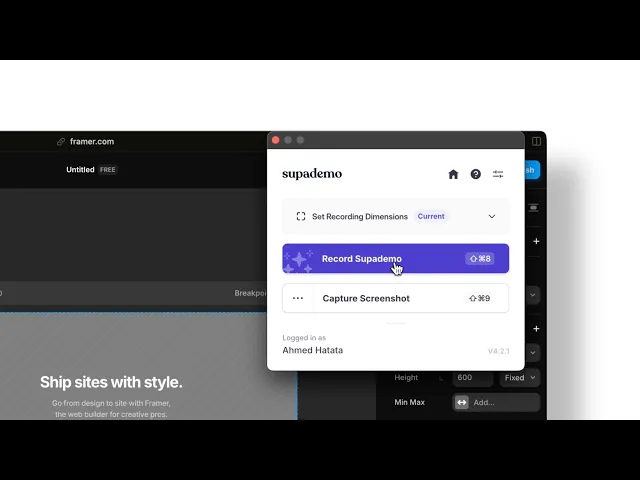
Best for: Marketing and product marketing teams that need to create and maintain a high volume of interactive demos, screencasts, and videos using a single tool, and who want to accelerate production with generative AI.
Supademo is an all in one platform for creating interactive demos, screencasts, demo videos, and showcases with a strong AI focus. In recent months, they pushed their AI Demo Agent to general availability, launched an MCP integration letting users manage the workspace directly from assistants like Claude or ChatGPT, and added voice cloning, automatic translation, and account level analytics.
Key Features
- Multiformat capture: HTML capture, screenshots, video, and screen recording inside the same workspace, with the ability to combine them into a single demo.
- AI Demo Agent: A conversational agent that replaces the website book a demo form, handles discovery, qualifies intent, and delivers the most relevant demo to the buyer. Because it is a brand new feature, it is still far from the maturity and capability levels of more established solutions in the space.
- Supademo MCP: A Model Context Protocol integration that lets you create, edit, and personalize demos using natural language directly from assistants like Claude or ChatGPT.
- Voice cloning and pronunciation dictionary: Voice cloning to maintain brand consistency in voiceovers, complete with a dictionary to ensure correct pronunciation of product names and specific terms.
- Showcases: Multi demo hubs that group tours, videos, and collateral under a single shareable link with unified tracking.
- Account level analytics: Aggregated analytics by account rather than just by individual visitor, featuring step by step engagement tracking and signal pushing to the CRM.
- Security and compliance: SOC 2 Type II, GDPR, CCPA, and SSO on premium plans.
What Sets It Apart
Supademo is the only tool on the list offering a native Model Context Protocol integration, making it possible to create, edit, and personalize demos in natural language right from assistants like Claude or ChatGPT. This is paired with a fairly deep AI layer.
Limitations
- The AI Demo Agent operates over pre recorded demos and does not navigate the actual product, meaning its conversation is restricted to the captured content and the questions anticipated during training.
- Although their release velocity is high, the depth of some new features still needs fine tuning, especially regarding voiceover quality and player customization when compared to more established tools.
- It does not cover sandbox provisioning or POC environments, limiting its fit for enterprise motions that require deep technical validation.
- Several integrations that enterprise teams take for granted are still unavailable.
4. Saleo
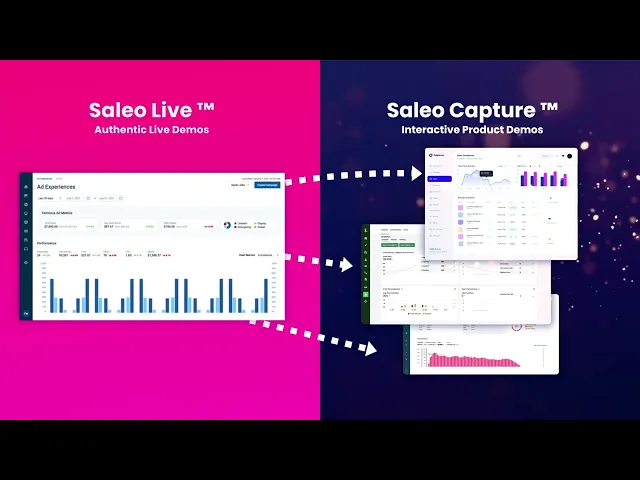
Best for: Presales and sales engineering teams relying on high value live demos who need to inject personalized data into the real product during the session without maintaining separate demo environments.
Saleo helps sales engineers deliver better live demos. It layers over the real product and allows you to change on screen data and tailor the scenario to the prospect without breaking the demo. The stack also includes Saleo Capture for pre recorded interactive demos, an AI Demo Agent for autonomous demos, and a Data Creation Agent for industry specific test data.
Key Features
- Saleo Live: An overlay layer that mounts onto the real product during a live demo, letting you inject personalized data, switch scenarios in real time, and adapt the narrative without leaving the session.
- Saleo Capture: Front end product cloning to build pre recorded interactive demos that can be shared as leave behinds or embedded on the website.
- AI Demo Agent: An autonomous conversational agent that handles discovery and delivers demos 24/7, giving buyers the option to click around and interact alongside the agent. It is a very new feature and still lags behind platforms with more mileage in agentic demos.
- Data Creation Agent: An AI that generates realistic synthetic datasets by vertical like manufacturing, retail, healthcare, and finance so the demo accurately reflects the prospect's context.
- Demo Analytics: An analytics layer capturing questions, intent signals, objections, and step by step engagement during the session.
- Native integrations: Connection with major CRMs and marketing automation platforms to sync engagement and signals back to the pipeline.
- Security and compliance: SOC 2 Type II, GDPR, and enterprise grade controls for clients facing strict compliance requirements.
What Sets It Apart
Saleo is the only platform on this list built to enhance the live demos led by a sales engineer. While other tools focus on pre recorded demos or sandboxes that buyers explore on their own, Saleo sticks to the live demo and solves a classic problem for sales engineers where real product data does not always fit the prospect's specific use case.
Limitations
- The initial setup requires heavy lifting, particularly when defining data schemas and implementing the overlay layer, which slows down the time to first demo in complex deployments.
- Built strictly for sales engineering and presales, its value for marketing led growth or teams without dedicated SEs remains limited.
- Saleo Capture for interactive demos falls behind in maturity compared to tools specializing exclusively in this format.
5. Navattic

Best for: B2B SaaS marketing and product marketing teams needing high fidelity HTML capture for interactive demos, who want to lean on a mature AI Copilot to speed up demo creation.
Navattic is an interactive demo platform based on HTML capture. Its editor allows you to tweak virtually any element of the captured interface, from text and data down to the behavior of inputs and buttons. In 2026, they pushed their AI Copilot to general availability in February and kept their conversational layer, Agent Demos, in beta.
Key Features
- High fidelity HTML capture: Clones the product front end piece by piece, preserving the look, hover states, animations, and interactive element behavior.
- Deep editor: Lets you edit almost any aspect of the captured UI, ranging from text and data to images, charts, and the response logic for inputs and buttons.
- AI Copilot: An AI assistant that generates copy, anchors tooltips, and suggests demo structures based on over 40,000 previous demo patterns.
- AI avatars and voiceovers: Digital avatar cloning to narrate demos in the presenter's voice, alongside text based voiceovers and multi language support.
- Agent Demos in beta: A conversational layer still in beta designed to run autonomous demos. Being in beta and operating over captures, it falls short of platforms boasting more mature agents that navigate the real product.
- Sandbox demos and A/B testing: Sandbox environments where visitors can explore freely, coupled with A/B testing to optimize conversion rates.
- Native integrations and security: Native integrations with major CRMs and marketing automation platforms, plus SOC 2 Type II and GDPR certifications.
What Sets It Apart
Navattic stands out in 2026 for the fidelity of its HTML capture, which reproduces the real product front end in incredible detail, including hover states and animations that other tools in the space typically lose. The AI Copilot, trained on more than 40,000 previous demo patterns, generates a first draft of the demo automatically and maintains messaging consistency across team members using Copilot Memory.
Limitations
- It only supports HTML capture, meaning there is no quick build screenshot option for simple demos, ultimately increasing the time to first demo for brief walkthroughs.
- The product is heavily focused on marketing, meaning sales engineering, customer success, or presales teams will find fewer features tailored to their specific workflows.
- Every product UI update requires recapturing the affected screens, creating continuous maintenance work for products with fast release cycles.
6. Walnut
Best for: Enterprise B2B SaaS companies handling long sales cycles and large buying committees, who need interactive demos, shared client deal rooms, and CRM data driven personalization.
Walnut is an interactive demo platform geared primarily toward enterprise teams in B2B SaaS. It is built around the AI Demo Engine, a suite of AI tools that handles everything from automatic demo creation to engagement analytics and multilingual translation. It typically fits well within organizations navigating long sales processes, where the demo is not just a static asset but rather an ongoing conversation with the buying committee stretching over weeks.
Key Features
- AI Demo Engine: An AI toolset covering demo creation, editing, analytics, and translation.
- AI Mode: Generates a first draft of the demo from a text brief or a product URL.
- StoryCaptureAI: Records a live demo and instantly converts it into an editable interactive demo.
- CRM driven personalization: Automatically injects CRM data into the demo to customize names, logos, metrics, and the prospect's context.
- Interactive deal rooms: Shared spaces where the buying committee can access demos, collateral, and videos assigned to their specific deal.
- InsightsAI with buyer intent signals: An analytics layer that prioritizes accounts based on engagement and broadcasts intent signals back to the CRM.
- TranslationAI: Automatic localization of demo content into multiple languages.
- Native integrations and security: Integrations with leading CRMs and marketing automation platforms, plus SOC 2 Type II, GDPR, and CCPA certifications.
What Sets It Apart
Walnut stands out in 2026 for being built from the ground up for enterprise sales dealing with long cycles and large buying committees. Their most unique feature is StoryCaptureAI, which records a live demo and automatically turns it into an editable interactive demo, saving teams the hassle of recapturing the flow from scratch.
Limitations
- The product has a steep learning curve, with various teams reporting it takes weeks to produce their first production ready demo.
- The AI Demo Engine features still require manual cleanup, especially for demos with complex flows where the AI tends to miss the mark.
- It lacks a native conversational layer or website AI agent, meaning teams wanting to add that piece must rely on a different tool.
7. HowdyGo

Best for: Small and mid market B2B SaaS teams wanting HTML capture based interactive demos without paying enterprise entry tickets, and who value having direct access to the vendor's founding team.
HowdyGo is an interactive demo platform based on HTML capture, positioning itself around accessible pricing and founder led support. Their product covers embeddable interactive demos, demo centers grouping several assets under a single link, and exports in different formats like GIF, webm, and mp4 to use the exact same demo for outbound, email, and marketing campaigns.
Key Features
- HTML capture via Chrome extension: Clones the product interface piece by piece straight from the browser without requiring any engineering involvement.
- Edit the UI without recapturing: The editor lets you change text, images, and data right on the capture without needing to re record the flow.
- Demo centers: Multi demo hubs pooling multiple assets into a single shareable link, which comes in handy when presenting several feature overviews to a buyer.
- Multi format export: Demos can be shared as interactive embeds, GIFs, webm, or mp4 files all from the exact same asset.
- AI voiceover and annotation generation: Automatic generation of narration and annotations over the demo's hotspots.
- Demo analytics and lead scoring: Tracking the visitor's journey through the demo, triggering automatic scoring, and pushing signals to the CRM.
- Native integrations: Connection with the primary CRMs and marketing automation platforms.
What Sets It Apart
HowdyGo sets itself apart in 2026 through its commercial model. The pricing is a flat rate featuring unlimited users on lower tiers, completely dodging the typical scaling costs of seat based tools on this list, and the support is founder led, offering direct access to the founding team through a shared channel.
Limitations
- The depth of their AI features is lower than other platforms on the list, as there is no conversational AI agent or a mature AI demo builder matching the level of other solutions on the market.
- It does not fit into enterprise motions leveraging sales engineering or processes needing deep technical validation, as it is fundamentally designed for marketing led and product led growth.
- The enterprise tooling lags behind concerning advanced SSO, audit logs, and deal intelligence, capping its fit for large organizations navigating strict compliance requirements.
