

Consensus vs. Navattic: what are the differences?

If you are evaluating software to automate product demos for your SaaS, chances are Consensus and Navattic have popped up on your radar. Both platforms help marketing and sales teams showcase their software more effectively, but they stem from completely different philosophies.
Consensus allows buyers to explore the product autonomously, tailoring the content to each person's interests. Navattic clones the actual product interface and turns it into interactive experiences that the prospect can navigate on their own directly from your website.
Which one is a better fit for your team? In this article we analyze both platforms in detail, covering their strengths and the scenarios where each provides the most value.
What is Consensus?
Consensus is an interactive demo platform that enables sales and presales teams to create automated and personalized product experiences. Its approach focuses on letting prospects explore the product at their own pace, choosing which areas interest them the most at the beginning of each demo so they only receive relevant content.
The platform offers several demo formats within a single ecosystem: on demand interactive videos, product simulations where the prospect can test the software in a controlled environment, guided product tours, and more recently, conversational AI Agents capable of qualifying and interacting with buyers autonomously.
Consensus is specifically designed for complex sales cycles involving multiple people in the purchasing decision. The platform ensures each stakeholder receives an experience tailored to their role.
Key features of Consensus
Personalized on demand demos: When starting the demo, the prospect selects the topics that interest them the most and the system automatically generates a journey adapted to their profile.
- Multiple demo formats: The platform combines interactive videos, product simulations in sandbox environments, and guided product tours within the same ecosystem.
- AI Agents: Conversational agents that interact with buyers autonomously, answering questions, qualifying leads, and capturing purchase intent signals during every interaction.
- Multi stakeholder sales: It allows every stakeholder in the buying process to get an experience tailored to their role and interests.
- Engagement analytics: It tracks which sections generate the most interest, how much time each person spends, and how the prospect navigates the content.
- Consensus AI: A suite of AI tools that includes automatic storyboard generation, scripts, voiceovers, and data editing to speed up demo creation and personalization.
- GTM tool integrations: It connects with Salesforce, HubSpot, Outreach, Salesloft, Marketo, Eloqua, Slack, Zapier, and more.
- Enterprise security: It complies with SOC 2 Type II and GDPR standards.
What is Navattic?

Navattic is a no code interactive demo platform designed so marketing, sales, and presales teams can create product experiences without relying on engineering. Its approach is based on capturing the real interface of any web application and transforming it into interactive journeys that prospects can explore at their own pace.
The platform offers several products within the same ecosystem: interactive demos with high fidelity HTML capture, Launchpad to automate demos in the sales cycle, and recently, Agent Demos where an AI agent guides the demo autonomously.
Navattic is especially geared towards marketing strategies and product led growth, allowing you to embed demos directly on your website, landing pages, or campaigns so buyers can discover the product before talking to sales.
Key features of Navattic
- No code interactive demos: It allows you to build complete demonstrations by capturing real product flows without needing to code or ask for engineering support.
- High fidelity HTML capture: It clones the software interface while preserving all the original interactivity, including animations, hover states, and dynamic elements.
- AI Copilot: It helps build demos by suggesting structure, copy, and tooltips based on best practices drawn from the platform's top performing demos.
- Agent Demos: A recent feature that lets you launch autonomous demos where an AI agent presents the product.
- Reusable templates: It includes predesigned and reusable elements that speed up the production of new demos and guarantee consistency across versions.
- Engagement analytics: A dashboard with metrics for views, time spent per step, drop off points, and participation levels.
- Native integrations: It connects with HubSpot, Salesforce, Marketo, Segment, Google Analytics, and over 25 other tools in the sales and marketing stack.
- Security and compliance: It complies with SOC 2 Type II and GDPR.
Consensus vs Navattic: which one should you choose?
Choosing between Consensus and Navattic fundamentally depends on the team using the tool, your primary use case, and how you want buyers to interact with your product. Even though both automate demos, their focus and strengths are quite different. Below we review the scenarios where each one is a better fit.
Choose Consensus if:
- Your sales cycle involves multiple stakeholders: You need a platform designed to facilitate group decisions, where each member of the buying committee gets content tailored to their specific role and interests.
- You want to combine interactive video with simulations and tours: You are looking for a platform that offers multiple demo formats (video, sandbox, product tours) within the same ecosystem.
- Your priority is demo analytics: You need granular visibility into how each person on the buying committee interacts with the demo so you can prioritize and personalize your sales follow up.
- You work with presales teams that need to scale: You want to reduce the burden of repetitive demos on your technical team without losing quality or personalization.
- You operate in enterprise environments with strict security requirements: You need to comply with SOC 2 Type II and GDPR, with an infrastructure proven by large software companies.
Choose Navattic if:
- Your main use case is marketing and web embeds: You need demos integrated into your website, landing pages, or ad campaigns to capture qualified leads at the top of the funnel.
- Your model is product led growth: You want prospects to explore your product on their own before speaking with sales, and you need intent data to prioritize them.
- You are looking for the highest possible fidelity in HTML capture: You need demos that preserve hover states, animations, and interactive elements exactly as they appear in the real product.
- You want to build a library of reusable demos: Your team needs to create multiple demos for different personas, industries, and funnel stages, and then reuse them at scale.
- Your team is non technical and needs a highly intuitive editor: Navattic's no code editor is designed so anyone on the marketing team can build demos without technical training.
Karumi: the alternative that goes beyond interactive demos
Consensus and Navattic both solve the problem of scaling demos well, each from their own approach. But in both cases, the prospect is still navigating through content that someone has prepared in advance. If they go off script or have an unexpected question, the demo cannot answer.
Karumi works differently. An AI agent connects directly to the real product, presents it live, and maintains a conversation with the prospect while navigating the interface.
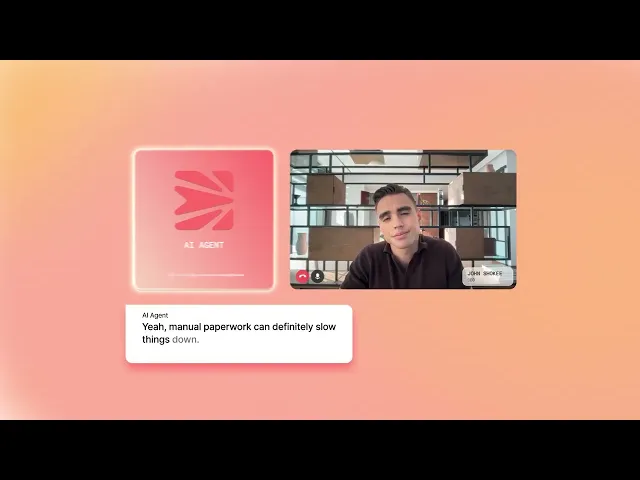
There are no captures or pre recorded videos: it is an AI agent that understands the product, decides what to show at any given moment based on the prospect's profile, and answers their questions in real time and in their language. Always available, with no need to schedule anything.
