

Walnut vs Navattic: what are the differences?

If you are evaluating tools to build interactive product demos, it is highly likely that Walnut and Navattic have shown up on your list. Both platforms help marketing and sales teams showcase their software more effectively, but they take entirely different approaches.
Walnut focuses on cloning the product frontend so sales teams can customize each demo without relying on engineering. Navattic focuses on capturing the interface with high fidelity and turning it into self guided walkthroughs that are embedded directly on your website, leaning heavily toward marketing and product led growth.
Which is the best choice for your team? In this article we compare both platforms in depth and analyze their strengths, limitations, and the scenarios where each one truly shines.
Comparison table: Walnut vs Navattic vs Karumi
| Dimension | Walnut | Navattic | Karumi |
|---|---|---|---|
| Demo type | Interactive demos based on HTML clones of the product frontend, sales-oriented. | HTML screen captures assembled into guided flows, oriented toward marketing and PLG. | Agentic demos where an AI agent guides the user inside the real product in real time. |
| AI usage | AI Demo Engine: AI Mode, StoryCaptureAI, EditsAI, InsightsAI, TranslationAI, and GuidesCreationAI. | AI Copilot for storyboarding and copy, AI Voiceovers, AI Avatars, and Agent Demos (autonomous demos with AI agents). | An autonomous AI agent interprets the software interface, navigates through it, and answers questions live. |
| Real-time interaction | No. Pre-recorded and editable demos without an autonomous agent interacting with the user. | No in interactive demos. Yes in Agent Demos (recent feature with autonomous agents over HTML captures). | Yes. The AI agent answers questions and adapts the demo live throughout the entire experience. |
| Personalization | Fast per-deal personalization: clone a demo, customize data and branding for each prospect. | Library-based: dynamic variables, branching, and at-scale personalization with Copilot. | Dynamic and automatic based on user profile, industry, and interests, with no prior setup required. |
| Formats | Interactive HTML demos, Deal Rooms, Playlists, embedded video. | Interactive HTML demos, sandbox demos (Growth plan), Agent Demos, web embeds. | Real-time demos inside the actual product. No pre-recorded videos or live sessions required. |
| Analytics | InsightsAI with engagement metrics, Salesforce and HubSpot integration. | Engagement dashboard, completion rates, drop-off, integration with GA, HubSpot, Salesforce, and Segment. | Analyzes user behavior during the session and identifies buying signals for the sales team. |
| CRM integration | Salesforce, HubSpot, Outreach, Slack, Zapier, and more. | HubSpot, Salesforce, Marketo, and 25+ integrations. | Automatic sync with Salesforce and HubSpot. |
| Multilingual support | TranslationAI for automatic demo localization. | Demo translation available on the Growth plan. AI Voiceovers in multiple languages. | Native and automatic. The AI agent operates in the prospect's language with no additional setup. |
| Security | SOC 2 Type II, GDPR, CCPA. | GDPR. SSO and directory sync on the Growth plan. | SOC 2, GDPR, ISO 27001. |
What is Walnut?
Walnut is an interactive demo platform built for sales and presales teams at B2B companies. Its main value proposition is cloning the product frontend and turning it into a controlled environment where sales reps can customize each demo without needing engineering help or staging environments.
The platform allows you to capture the software interface right from your browser using a Chrome extension and then edit any visible element including text, images, charts, data, and logos. All of this happens without writing a single line of code.
In 2026, Walnut doubled down on artificial intelligence by offering a suite of tools designed to speed up demo creation and customization.
Key features of Walnut
- No code interactive demos: It allows you to build realistic product demonstrations without technical knowledge, which speeds up the launch of new experiences for the sales team.
- Customization by buyer persona: Visual and text elements adapt based on the industry, role, or user needs so every demo feels relevant to their specific context.
- Guided or free exploration: It offers both structured step by step walkthroughs and the ability for the prospect to navigate the demo on their own by choosing which parts of the product to explore.
- AI Demo Engine: A suite of AI tools that includes demo creation from text prompts (AI Mode), automatic walkthrough recording (StoryCaptureAI), editing suggestions (EditsAI), automatic translation (TranslationAI), and guide generation (GuidesCreationAI).
- Built in analytics: It provides detailed metrics on prospect behavior, including which sections generate the most interest and how they interact with every element in the demo.
- Integrations with GTM tools: It connects with major CRMs and marketing automation platforms like Salesforce, HubSpot, Outreach, Slack, and Zapier.
- Enterprise security: It complies with security standards like SOC 2 Type II, GDPR, and CCPA, featuring an architecture that does not require access to the production backend.
What is Navattic?

Navattic is a platform that allows you to build no code interactive demos right from your browser. Instead of relying on video or static screenshots, it turns real software usage flows into guided experiences that prospects can explore at their own pace.
It is built for marketing, sales, and customer success teams that need to showcase the product in a more dynamic and customized way by adapting the content to the buyer persona to speed up their decision making process. Its HTML capture preserves the interactive states of the product with high fidelity including hover states, dropdown menus, animations, and clickable elements exactly as they appear in the real interface.
Key features of Navattic
- No code interactive demos: It allows you to build full demonstrations by capturing real product flows without needing to code or ask for engineering support.
- High fidelity HTML capture: It clones the software interface while preserving all original interactivity, including animations, hover states, and dynamic elements.
- AI Copilot: It helps build demos by suggesting structure, copy, and tooltips, drawing on best practices pulled from the top performing demos on the platform.
- Agent Demos: A recent feature that lets you launch autonomous demos where an AI agent presents the product, answers questions, and navigates through the captures in real time.
- Dynamic personalization: It allows you to tailor content using variables like name, company, or logo, and build branching flows so each prospect sees what matters most based on their profile.
- Reusable templates: It includes pre designed and reusable elements that speed up the production of new demos and guarantee consistency across versions.
- Engagement analytics: A dashboard featuring metrics on views, time spent per step, drop off points, and participation levels.
- Native integrations: It connects with HubSpot, Salesforce, Marketo, Segment, Google Analytics, and over 25 other tools in the sales and marketing stack.
- Security and compliance: It complies with regulations like GDPR and implements access controls and data protection to guarantee safe use in corporate environments.
Walnut vs Navattic: which one should you choose?
Choosing between Walnut and Navattic mainly depends on the team that will use the tool, your core use case, and your available budget. Even though both create HTML interactive demos, their approach and strengths are completely different.
Below we go over the scenarios where each one fits best.
Choose Walnut if:
- You want to build customized interactive demos without writing code: Your team needs to launch product demos quickly without relying on engineering or technical skills.
- You are looking to offer guided experiences or let the user explore freely: You need the flexibility to combine step by step walkthroughs with the option for the prospect to navigate on their own.
- You want to speed up demo creation with artificial intelligence: You are looking for a platform that lets you generate demos from a prompt or by recording a walkthrough to cut down on production time.
- You operate in international markets and need fast translation: TranslationAI lets you localize demos into multiple languages automatically.
- Enterprise security is a must: You need to comply with SOC 2 Type II, GDPR, and CCPA, and you require an architecture without backend access.
Choose Navattic if:
- Your main use case is marketing and website embeds: You need demos embedded on your website, landing pages, or ad campaigns to capture qualified top of funnel leads.
- Your model is product led growth: You want prospects to explore your product on their own before talking to sales, and you need intent data to prioritize.
- You are looking for the highest fidelity in HTML capture: You need demos that preserve hover states, animations, and interactive elements exactly like the real product.
- You want to build a library of reusable demos: Your team needs to create multiple demos for different personas, industries, and funnel stages, and reuse them at scale.
- Your team is non technical and needs a highly intuitive editor: The Navattic no code editor is designed so anyone on the marketing team can build demos without technical training.
Karumi: the alternative with agentic demos
Both Walnut and Navattic are solid platforms for creating interactive demos, but they both share a fundamental limitation: the demos they produce are static or semi guided experiences where the prospect navigates through pre recorded content. There is no intelligent agent to present the product in real time, answer spontaneous questions, or adapt the journey on the fly.
Karumi takes a completely different approach. Instead of cloning interfaces or capturing screens, Karumi has created an entirely new product category: agentic demos. An artificial intelligence agent takes control of the demo, navigates through the real product, explains every feature in context, and holds a conversation with the prospect throughout the entire experience.
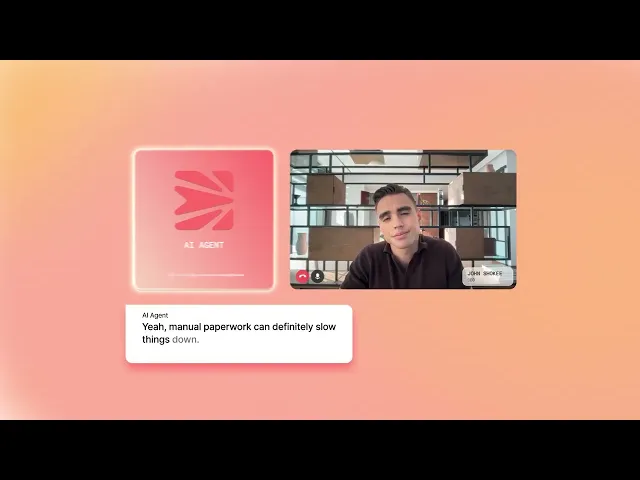
The result is a demo that works like an automated sales meeting: highly personalized, available 24/7, in the prospect's native language, and requiring zero human intervention.
