

The 7 best Navattic alternatives in 2026

Short answer
The 7 best Navattic alternatives in 2026 are Karumi, Storylane, Arcade, Consensus, Walnut, Demostack and Reprise. Karumi is the pick if you want an AI agent that joins the buyer on a video call and demos your real product live.
In modern SaaS teams product demos play a critical role. They allow users to get to know the product clearly and grasp its value faster while moving through the buying process with less friction than traditional videos or static screenshots.
Navattic is a well-known tool for creating no code interactive demos but it does not always fit every team's specific needs. Many companies begin looking for other options as requirements grow like the need for deeper personalization or advanced analytics.
In this article we analyze the 7 best Navattic alternatives highlighting their key features to help you choose the best fit for your sales and marketing goals.
Why are users looking for a Navattic alternative?
Some teams consider exploring alternatives to Navattic because even though the platform offers useful solutions for creating product demos many seek additional functions or more flexibility or specific features that better fit their sales and marketing processes.
Below we review the most common reasons why users choose other options:
- High and inflexible starting price: the plans are expensive and do not offer a monthly payment option since they only allow quarterly or annual commitments upfront.
- No free trial for advanced plans: Navattic offers a basic free plan but does not allow users to test the full features of its paid plans before making a financial commitment.
- Limited customization options: the platform offers few tools to adjust the design and appearance of the demos which makes it difficult for teams to adapt content to their brand style or specific client needs.
- Complicated setup: creating demos can be slow and unintuitive and the platform requires time to learn how to use it effectively.
- Limited mobile experience: on mobile devices the platform does not always work smoothly and some touch interactions fail.
- Important features only in expensive plans: advanced analytics and brand customization and deep CRM integrations are only available in the higher tier plans.
- Format limitations: it focuses almost exclusively on HTML captures and does not allow recording or exporting demos as video.
- Difficult to organize large libraries: as the team grows the lack of advanced folders and global search makes it complicated to keep everything organized and updated.
What are the best Navattic alternatives?
If you are looking for other options there are several platforms that stand out as Navattic alternatives. Each one offers unique features that better suit different teams and needs. Below we review the best Navattic alternatives and what each one can contribute to your product demo strategy.
| Software | Demo type | AI usage | Real time interaction | Multilingual support | Security |
|---|---|---|---|---|---|
| Karumi | Agentic demo | High / Autonomous. An AI agent navigates the real interface, reasons, and interacts with the prospect in real time. | Yes. The AI agent can answer questions, navigate the product, and adapt the demo live. | Native and automatic. Supports multiple languages without extra setup. | SOC 2, GDPR, ISO 27001 |
| Storylane | Interactive demo | Low. AI focused on content generation, translations, and voiceovers, with no autonomous agent. | No. Users follow predefined flows without dynamic AI interaction. | Manual. Each demo must be adapted per language. | SOC 2 Type II, GDPR |
| Arcade | Interactive demo | Low. AI used mainly for voiceovers, videos, and visual assets, not for live interaction. | No. Demos follow predefined paths without real time responses. | Manual. Each demo requires localization per language. | SOC 2, GDPR |
| Consensus | Interactive demo | Low. AI optimizes predefined demos but does not act as an autonomous agent. | No. Content adapts to user choices, but there is no real time AI interaction. | Manual. Language versions must be created separately. | SOC 2 Type II, GDPR |
| Walnut | Interactive demo | Low. AI is used for demo personalization, without real time interaction. | No. Prospects explore predefined demos independently. | Manual. Each demo must be adapted per language. | SOC 2 Type II |
| Demostack | Interactive demo | Low. AI plays a limited role, focused on demo setup and personalization. | No. Users interact with predefined environments and flows. | Manual. Localization requires separate demos. | SOC 2 Type II, GDPR, CCPA |
| Reprise | Interactive demo | Low. AI is not a core component of the demo experience. | No. Demos are interactive but not dynamically driven by AI. | Manual. Each demo must be localized separately. | SOC 2 Type II, GDPR |
1. Karumi
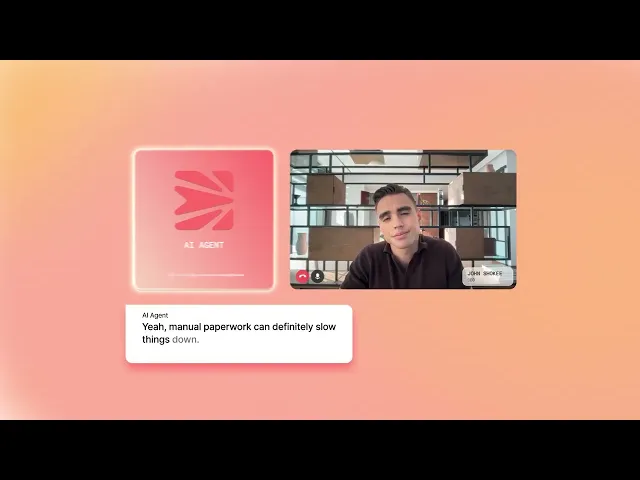
Karumi is a platform that allows you to create agentic demos which are real time product presentations powered by an AI agent that go beyond traditional videos or screenshots. During the demo the agent can navigate through the software and answer questions and adjust the experience based on user interaction.
Designed for sales and marketing teams Karumi makes it easy to offer personalized product demos at any time without needing a human presenter. Its multilingual support and voice capabilities and contextual intelligence allow the demo to become an interactive process where the product explains itself.

Key highlights
- Real time AI agent: the agent guides prospects during the demo showing features and answering questions immediately.
- 24/7 availability: demos can be conducted at any time without depending on the schedule of a sales representative.
- Automatic personalization: the demo adapts to the profile and industry and needs of each user offering a unique experience.
- Multilingual support: the agent can communicate in different languages which makes it easier to reach international audiences.
- CRM integration: the data and results from each demo sync automatically with leading CRM and marketing automation tools.
- Lead tracking and qualification: the platform analyzes user interaction to evaluate their interest and buying potential.
- Automatic updates: the agent always shows the most recent version of the product reflecting changes and new features.
- Advanced access control: manage roles and permissions so that each team member only accesses the information and features they need.
- Audit logs: maintain a detailed history of all actions performed on the platform to ensure traceability and control.
- Security and compliance: Karumi complies with privacy and security standards such as SOC 2 and GDPR and ISO 27001.
➡️ Read our dedicated article comparing Karumi vs. Navattic.
2. Storylane
Storylane is a platform that allows you to create interactive product demos without the need for code offering experiences where prospects can explore the software at their own pace. Its focus centers on simplifying complex processes and transforming product features into clear and practical tours.
Designed for sales and marketing teams Storylane facilitates the creation of personalized demos that can be easily shared and adapted to different user profiles.
Key highlights
- No code interactive demos: it allows for the creation of guided product experiences using intuitive visual tools without needing technical knowledge.
- Simple visual editor: the editor makes it easy to modify text and images and hotspots and other elements directly on the platform.
- Audience segmentation: demos can be personalized for different types of prospects showing relevant content and features based on their profile.
- AI for content: Storylane uses artificial intelligence to generate guides and translations and narrations but it does not offer an autonomous agent that interacts in real time.
- Easy sharing and embedding: demos can be shared via direct links or integrated into web pages and emails and CRMs and other channels.
- Analytics and tracking: the platform records how prospects interact with the demo to obtain valuable information regarding engagement.
- Security and compliance: it complies with enterprise level security and privacy standards including SOC 2 certification and GDPR conformity.
3. Arcade
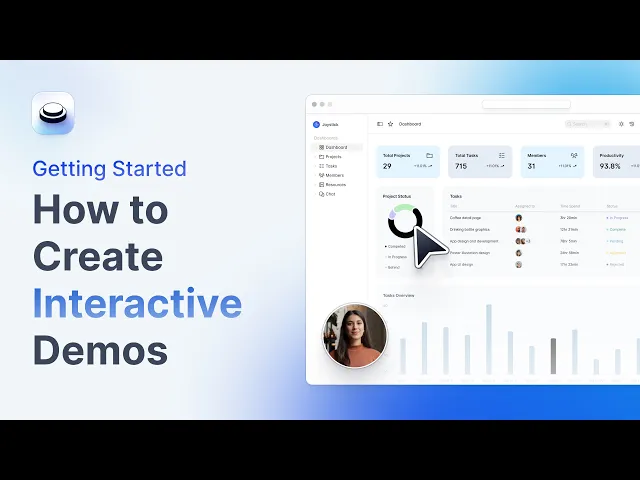
Arcade is a no code platform that allows you to create interactive demos and product content in a fast and visual way. Its editor makes it easy for marketing and sales and product teams to capture application flows and add interactive elements and publish self guided demos ready to share with prospects and customers.
Additionally Arcade allows for the addition of videos and narrations and graphics to make demos more engaging and easily measure how users interact with them.
Key highlights
- No code creation: it allows for the construction of complete demos and interactive content without having programming knowledge.
- Visual capture and editing: capture real application flows and edit them with hotspots and calls to action and chapters and other interactive elements.
- AI content generation: add voiceovers and videos and personalized graphics with artificial intelligence to make demos more attractive.
- Detailed analytics: measure user interaction including clicks and session time and points where they drop off the demo.
- Tool integration: connect with CRMs and marketing platforms to sync data and generate leads and optimize workflows.
- Flexible distribution: share demos via personalized links or embed them in websites or export them as GIFs or videos for other channels.
- Team collaboration: several members can work together on the creation and management of demos within a shared space.
- Security and compliance: Arcade complies with enterprise level privacy and security standards including SOC 2 and GDPR.
4. Consensus

Consensus is an automated demo platform that allows prospects to discover the product autonomously while staying focused on their specific interests. Each demo adapts dynamically to show only the most relevant information which helps eliminate noise and communicate product value in a clear and direct way.
It is designed for sales and presales teams working with complex buying processes involving multiple decision makers. Consensus helps improve the buyer experience and accelerate the decision making process.
Key highlights
- On demand demos: prospects can explore the product whenever they want without relying on recorded videos or static presentations.
- Prospect profile adaptation: demo content adjusts according to user responses and context showing only the most relevant information for each specific case.
- Interaction analysis: this feature allows teams to understand which sections of the demo capture the most interest and how users move through the journey.
- Behavioral tracking: the platform records which parts of the demo are viewed and how users interact throughout the session.
- Limited use of AI: artificial intelligence is primarily used to adjust and optimize preconfigured demos rather than acting as an autonomous agent capable of interacting with users or answering questions in real time.
- Sales and marketing integrations: demo data syncs with CRM tools and marketing platforms to streamline operations.
- Security and compliance: the platform complies with security and privacy standards such as SOC 2 Type II and GDPR.
5. Walnut
Walnut is a platform focused on creating interactive and personalized product demos that allow prospects to experience software in a practical and autonomous way. Its value proposition is designed so that sales and marketing and customer success teams can showcase the product flexibly and scalably without relying on recorded videos or live presentations.
The tool makes it easy to adapt each demo to different user profiles and share it effortlessly through multiple channels. Additionally it offers data on user behavior to help optimize the experience and improve the performance of the sales process.
Key highlights
- No code interactive demos: it allows for the creation of realistic product demonstrations without needing technical knowledge.
- Personalization by profile: demos can be adapted to different types of users based on their context or needs.
- Guided tours and free exploration: it offers both guided experiences and demos that prospects can navigate at their own pace.
- Integrated analytics: it provides data on how users interact with the demo and which parts generate the most interest.
- Limited use of AI: artificial intelligence is used to personalize content but it does not function as an autonomous agent in real time.
- Sales and marketing integrations: it connects with popular CRMs and marketing automation platforms to sync data.
- Security and compliance: it complies with enterprise security standards such as SOC 2 Type II.
6. Demostack
Demostack is a platform designed so that sales and marketing teams can create personalized product demos without relying on developers or technical teams. It allows you to work with different formats such as cloned environments and guided tours and interactive sandboxes.
The tool is aimed at companies that want to showcase product value consistently throughout the entire sales cycle. Teams can share specific demos for each audience and analyze how prospects interact to improve their commercial strategy.
Key highlights
- No code demo creation: it allows for the construction of personalized product experiences without needing technical support.
- Cloned environments and overlays: pt offers the possibility of replicating the product or overlaying interactive layers on top of the actual application.
- Interactive sandboxes: prospects can explore the product within controlled testing environments.
- Integrated analytics: it provides data on usage and engagement and demo performance to optimize the pipeline.
- GTM integrations: it connects with CRMs and marketing tools to sync data and facilitate lead tracking.
- Team collaboration: it allows multiple users to create and edit and manage demos jointly.
- Security and compliance: it complies with security and privacy standards such as SOC 2 Type II and GDPR and CCPA.
7. Reprise

Reprise is a platform that allows you to create interactive and reusable product demos without needing technical support. Its technology clones the product interface to generate navigable demos that behave like the actual software.
It is designed for sales and marketing teams that need to scale their demos without losing consistency. Reprise makes it easy to edit and update and reuse demos while adapting them to different audiences and each stage of the sales process.
Key highlights
- No code demos: it allows for the creation and maintenance of interactive demos without advanced technical knowledge.
- Interface cloning: it generates navigable demos from the product front end for a realistic experience.
- Simple editing: teams can update flows and screens without having to rebuild the demo from scratch.
- Interactive elements: add hotspots and text and buttons to guide users during exploration.
- Integrated analytics: it offers metrics on interaction and usage time and the most visited sections.
- Team collaboration: multiple users can create and manage demos within a single workspace.
- Security and compliance: it complies with security and privacy standards such as SOC 2 Type II and GDPR.
