

The 6 best Saleo alternatives in 2026

Short answer
The 6 best Saleo alternatives in 2026 are Karumi, Navattic, Walnut, Storylane, Reprise and Consensus. Karumi is the pick if you want an AI agent that joins the buyer on a video call and demos your real product live.
Most B2B SaaS buyers want to try the product on their own before talking to a sales rep. If your website only offers static screenshots or a contact form, they will likely go to the competition.
Interactive product demos allow users to explore the software without friction, quickly understand its value, and move forward in the purchasing process on their own. This leads to better conversion rates and shorter sales cycles.
Saleo is a well known platform for creating live demos with custom data, but it does not always fit the needs of every team. In this article we analyze the 6 best Saleo alternatives in 2026 to help you find the option that best fits your strategy.
Why are users looking for a Saleo alternative?
Saleo is a powerful tool for presales teams conducting live demos, but it has certain limitations that lead many companies to explore other options:
- High and opaque pricing: Saleo does not publish its rates on its website. Their annual contracts require a significant initial investment that increases based on the number of users and contracted modules, without offering a free trial or an accessible starter plan.
- Slow and technical implementation: Deploying the platform is complex and can take up to two months before you start seeing results.
- Reliance on the support team: Several users point out that many tasks are not self service. Building tables, adjusting data, or modifying elements frequently requires reaching out to the Saleo team, which slows down demo creation and iteration.
- Errors during live presentations: Glitches and unexpected behaviors during live demos are common, a critical problem when you are in front of a prospect.
- Steep learning curve: The platform requires specific training and an internal manager to guide the team.
- Difficulty with complex demos: When the demonstration includes multiple screens, data flows, or scenarios, building and maintaining them becomes cumbersome according to the users themselves.
What are the best Saleo alternatives?
Below we present the best alternatives to Saleo in 2026, designed to create effective demos tailored to different marketing and sales strategies.
| Software | Demo type | AI usage | Real-time interaction | Multilingual support | Security |
|---|---|---|---|---|---|
| Karumi | Agentic demo | High / Autonomous 🧠 An AI agent navigates the real interface and interacts with the user in real time. | Yes ✅ The agent answers questions and adapts the demo live. | Native & automatic 🌐 Works in multiple languages without extra setup. | SOC 2, GDPR, ISO 27001 |
| Navattic | Interactive demo | Low ⚙️ AI focused on generating content like text or guides, with no autonomous agent. | No ❌ Users follow predefined flows at their own pace. | Manual ✍️ Localization is handled separately. | GDPR |
| Walnut | Interactive demo | Low ⚙️ AI geared toward personalizing demo elements, without live interaction. | No ❌ Prospects navigate predefined walkthroughs independently. | Manual ✍️ Each language requires a separate version. | SOC 2 Type II, GDPR, CCPA |
| Storylane | Interactive demo | Low ⚙️ AI used to create text, translations, and voiceovers, not as a live agent. | No ❌ Users go through prebuilt walkthroughs without dynamic interaction. | Manual ✍️ Language versions must be managed separately. | SOC 2, GDPR |
| Reprise | Interactive demo | Low ⚙️ Focused on cloning interfaces, not on autonomous AI. | No ❌ Navigable clones without real-time adaptation. | Manual ✍️ Localization is done separately. | SOC 2 Type II, GDPR |
| Consensus | Interactive demo | Low ⚙️ AI optimizes preconfigured demos without functioning as an autonomous agent. | No ❌ Content adapts to the user's profile, but there is no live AI interaction. | Manual ✍️ Language versions are created independently. | SOC 2 Type II, GDPR |
1 . Karumi
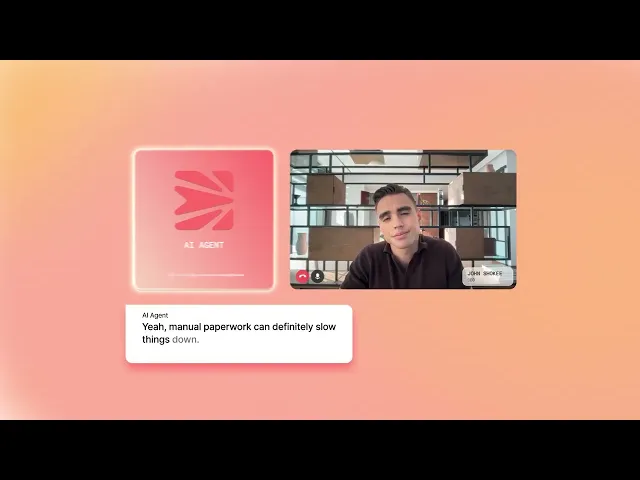
Karumi is a platform designed to create agentic demos, product demonstrations where an artificial intelligence agent guides the user in real time. Unlike traditional solutions based on static screenshots or prerecorded walkthroughs, here the AI operates directly on the software, navigates its features, and answers the user's questions while adapting the experience to their behavior.
Built for marketing and sales teams, Karumi allows you to offer personalized experiences without needing a human presenter. Thanks to its ability to understand context, communicate in different languages, and dynamically adjust the journey, the demo becomes an interactive space where the product itself proves its value.

Key highlights
- Real time AI agent: It guides the prospect inside the product, shows features, and answers questions throughout the entire experience.
- Permanent availability: Demos are accessible at any time, without depending on the sales team's schedule.
- Automatic personalization: The journey adapts to the user's profile, industry, and behavior, creating a unique experience for each visitor.
- Multilingual support: The agent can communicate in different languages, which makes expanding into international markets easier.
- CRM integration: Data generated in each demo is automatically sent to tools like Salesforce or HubSpot.
- Lead qualification and buying intent: The platform analyzes how users interact to detect the opportunities with the highest likelihood of conversion.
- Continuous updates: Demos always reflect the most recent version of the product without manual intervention.
- Access control: It allows you to define roles and permissions to manage who can view or edit each piece of content.
- Complete activity history: It records all interactions for detailed tracking.
- Security and compliance: It complies with standards like SOC 2, GDPR, and ISO 27001 to guarantee data protection.
➡️ Read our dedicated article comparing Karumi vs.Saleo.
2 . Navattic

Navattic is a platform that allows you to create no code interactive demos directly from your browser. Instead of using videos or static screenshots, it transforms real product flows into guided experiences that prospects can navigate on their own.
It is geared towards sales, marketing, and customer success teams looking to improve how they present their product and accelerate decision making. Their demos are easily distributed and can be adjusted to different user profiles throughout the funnel.
Key highlights
- No code interactive demos: It allows you to build complete product experiences without needing technical support, which speeds up implementation.
- Reusable templates: It includes predesigned structures and components that speed up the creation of new demos and maintain visual consistency.
- User analytics: It offers detailed interaction metrics like clicks, session duration, and engagement levels.
- Limited use of AI: It incorporates artificial intelligence to generate certain content within the demo, like texts or guides, but it does not act as an autonomous agent in real time.
- Team collaboration: It allows multiple members to work together on creating and editing demos.
- Integrations with GTM tools: It connects with CRMs and marketing platforms to centralize data and optimize processes.
- Security and compliance: It complies with regulations like GDPR and includes access controls for enterprise environments.
3. Walnut
Walnut is a platform focused on the creation of interactive and customizable demos that allow prospects to explore the product in a hands on and autonomous way. Its goal is to help sales, marketing, and customer success teams generate engaging and scalable experiences without resorting to videos or live presentations.
The tool makes it easy to customize each demo according to the user type and distribute it across multiple channels. Additionally, it provides data on visitor behavior.
Key highlights
- Flexible exploration: It combines step by step walkthroughs with free navigation so the user can decide how to discover the product.
- Personalization by profile: It adapts texts and visual elements based on the prospect's industry, role, or needs to increase content relevance.
- AI applied to personalization: It uses artificial intelligence to adjust demo elements, although it does not work as a real time interactive agent.
- No code creation: It allows GTM teams to build high fidelity demos without needing to program, accelerating their launch.
- Strategic analytics: It provides information on which sections spark the most interest and where friction points occur in the experience.
- Integrations with the GTM ecosystem: It connects with CRMs and automation tools to synchronize lead data.
- International security and compliance: It complies with standards like SOC 2 Type II, GDPR, and CCPA, guaranteeing the protection of corporate and user data.
4. Storylane
Storylane is a platform focused on creating no code interactive demos, allowing users to explore a product autonomously. Its purpose is to turn complex features into clear and easy to follow journeys, designed to quickly convey the product's value.
It is built for marketing and sales teams that need to scale demo production and adapt them to different audience profiles. Its visual design and commitment to simplicity allow for creating cleaner experiences tailored to each type of user.
Key highlights
- No code interactive demos: It lets you create product journeys with visual tools, without needing technical knowledge.
- Intuitive visual editor: It makes it easy to edit texts, images, hotspots, and other elements directly from the platform.
- Audience segmentation: Demos can be adapted based on the user's profile to show more relevant content.
- Content oriented AI: It incorporates artificial intelligence to generate texts, translations, and voiceovers, although it does not operate as a real time agent.
- Flexible distribution: Demos can be shared via links or embedded in websites, emails, and campaigns.
- Behavioral analytics: It offers data on how users interact, including clicks and navigation within the demo.
- Integrations with marketing and sales tools: It connects with CRMs and other platforms to facilitate the flow of information.
- Security and compliance: It complies with standards like SOC 2 and GDPR, and includes features like SSO and custom domains for enterprise environments.
5. Reprise

Reprise is a platform that allows you to create reusable interactive demos without needing technical support. Its technology clones the product's interface to generate navigable experiences that behave like the real software, offering a very faithful and realistic experience.
It is geared towards sales and marketing teams that need to scale demo delivery without losing consistency. The platform simplifies the creation, updating, and reuse of demos, allowing them to be adapted to different audiences and stages of the sales cycle.
Key highlights
- No code demos: It allows you to create and maintain interactive demos without advanced technical knowledge.
- Interface cloning: It replicates the product's frontend to generate navigable and realistic experiences.
- Simple editing: It makes it possible to update flows and screens without having to rebuild the demo from scratch.
- Interactive elements: It includes hotspots, buttons, and guided texts to accompany the user's exploration.
- Integrated analytics: It offers metrics on interaction, time spent, and most visited sections.
- Team collaboration: Multiple users can create and manage demos within a shared space.
- Security and compliance: It complies with standards like SOC 2 Type II and GDPR, ensuring the protection of company and user data.
6. Consensus

Consensus is an automated demo platform that allows prospects to explore a product autonomously, focusing only on the information that is relevant to them. Each demo dynamically adapts to the user's profile, showing personalized content based on their role, needs, or interests.
It is especially geared towards sales and presales teams working with complex buying cycles and multiple decision makers. Thanks to fully personalized and on demand demos, Consensus improves the buyer experience and makes it easier to understand the product's value.
Key highlights
- On demand demos: Users can explore the product at their own pace, without depending on live presentations or prerecorded videos.
- No code demo creation: It allows you to capture real product flows and turn them into guided experiences without needing to program.
- Personalization by profile: The content is adjusted based on the user's role, answers, and behavior.
- Complete visual editor: It makes it easy to edit texts, images, interactive points, and even add videos or GIFs.
- Interaction analytics: It offers detailed metrics on which parts of the demo generate the most interest.
- Behavior tracking: It records user navigation within the demo and how they interact with each section.
- Integrations with sales tools: It syncs data with CRMs and marketing automation platforms.
- Security and compliance: It complies with standards like SOC 2 Type II and GDPR to guarantee data protection.
