

The 7 best platforms for delivering enterprise level product demos

Short answer
The 7 best platforms for delivering enterprise level product demos are Karumi, Demostack, Consensus, Navattic, Storylane, Reprise and Walnut. Karumi is the pick if you want an AI agent that joins the buyer on a video call and demos your real product live.
In enterprise sales, the demo is not a simple step in the commercial process, but one of the most decisive moments. When several stakeholders are involved, sales cycles lengthen and contracts are of high value, you need something more than a standard presentation.
Companies expect personalized, secure experiences that are aligned with their specific needs. Additionally, they need guarantees regarding aspects like data protection, access management, and adaptation to different user profiles. Not all tools are prepared to offer the level of control, scalability, and integration that this type of client demands.
For this reason, in this article, we analyze the 7 best platforms to offer enterprise level product demos, highlighting their strengths and the type of team or strategy they fit best.
Comparison table: the 7 best enterprise product demo platforms
| Software | Demo type | AI usage | Real-time Interaction | Multilingual support | Security |
|---|---|---|---|---|---|
| Karumi | Agentic demo | High / Autonomous 🧠. AI agent navigates the real interface and interacts in real time. | Yes ✅. The AI agent can answer questions and adapt the demo live. | Native and automatic 🌐. Supports multiple languages without extra setup. | SOC 2, GDPR, ISO 27001 |
| Demostack | Interactive demo | Low ⚙️. Focused on demo setup, cloned environments, and personalization. | No ❌. Interaction with predefined sandboxes and flows. | Manual ✍️. Requires separate demos for localization. | SOC 2 Type II, GDPR, CCPA |
| Consensus | Interactive demo | Low ⚙️. AI is used to optimize preconfigured demos without real-time agents. | No ❌. Prospects explore on-demand demos at their own pace. | Manual ✍️. Personalization is based on user profile and context. | SOC 2 Type II, GDPR |
| Navattic | Interactive demo | Low ⚙️. Captures real browser flows but lacks autonomous interaction. | No ❌. Users explore guided tours without live assistance. | Manual ✍️. Localization of demos is required for different languages. | SOC 2 Type II, GDPR |
| Storylane | Interactive demo | Low ⚙️. AI generates guides, translations, and narrations for content. | No ❌. Users follow predefined, segmented walkthroughs. | Manual / Assisted ✍️. AI helps with translations, but each version must be adapted. | SOC 2 Type II, GDPR |
| Reprise | Interactive demo | Low ⚙️. Clones the interface to generate navigable demos without autonomous AI. | No ❌. Users navigate through pre-built flows and screens. | Manual ✍️. Each demo requires specific localization. | SOC 2 Type II, GDPR |
| Walnut | Interactive demo | Low ⚙️. Uses AI to adjust visual and text content based on user profile. | No ❌. Offers structured step-by-step tours or free exploration. | Manual ✍️. Each demo requires specific localization. | SOC 2 Type II, GDPR, CCPA |
1. Karumi
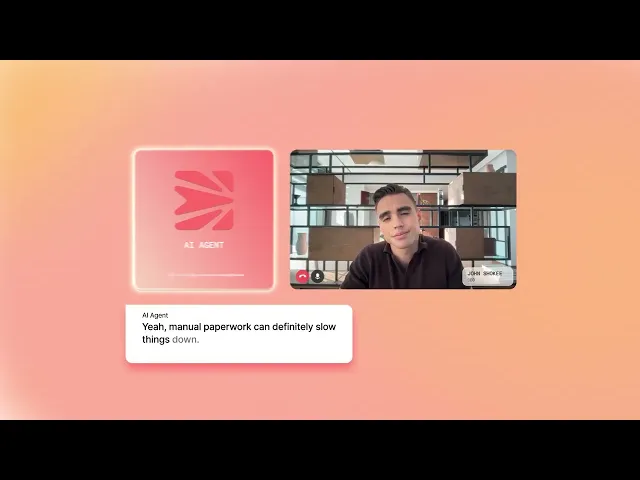
Karumi is a platform focused on the creation of agentic demos, an advanced format in which an artificial intelligence agent presents the software in real time. Unlike videos recorded in advance or static captures, the agent interacts directly with the product interface, navigates through its functions, and responds to user questions throughout the entire demo.
This solution is designed for sales and marketing teams that want to scale their operations without depending on a human presenter. Karumi offers personalized and adaptive demos, where each prospect receives an experience aligned with their sector and profile. Its capabilities in voice, reasoning, and multiple languages make the demo interactive and conversational, meeting the highest enterprise security standards.

Key highlights
- AI agent demos: an intelligent agent guides users in real time, showing key functions, answering questions, and adapting the path based on the interaction of the prospect.
- Availability 24/7: demos can be executed at any time, eliminating the dependence on sales team schedules.
- Real time personalization: the content and flow of the demo adjust dynamically to the profile, sector, and interests of each user.
- Multilingual support: the agent communicates in several languages, facilitating the capture of international leads and the global demonstration of the product.
- Integration with CRM: the data generated during the demo synchronizes automatically with platforms like Salesforce or HubSpot.
- Lead qualification: it analyzes user behavior during the demo to identify signals of high interest and prioritize sales opportunities.
- Automatic updates: demos always reflect the most recent version of the product, avoiding the need for new recordings after each update.
- Advanced access control (RBAC): it manages user roles and permissions so each team member can only access the information and functions that belong to them.
- Audit logs: it maintains a detailed history of all actions performed on the platform.
- Security and compliance: it complies with enterprise level security and privacy standards, including SOC 2, GDPR, and ISO 27001.
2. Demostack
Demostack is a platform designed for sales and marketing teams that allows the creation of personalized interactive demos without depending on developers or technical support. It supports different formats, such as cloned environments, guided paths, and interactive sandboxes, offering a realistic and controlled experience of the product.
The tool is intended for companies that want to present the value of their product consistently throughout the entire sales cycle. Teams can adapt each demo to different client profiles, analyze how prospects interact, and optimize their commercial strategies with precise usage and engagement data.
Key highlights
- No code creation: it allows go to market teams to build personalized product experiences completely independently.
- Cloned environments and overlays: it replicates the real interface of the product or overlays interactive elements for high fidelity demos.
- Interactive sandboxes: secure and controlled test environments where prospects can explore specific functions.
- Detailed analysis: it provides precise data on usage, interaction, and the performance of each demo to optimize the sales strategy.
- Integration with go to market tools: it connects with CRMs, marketing platforms, and other go to market tools to synchronize data and facilitate lead follow up.
- Team collaboration: several users can co create, edit, and manage the demo library within a shared space.
- Security and compliance: it complies with international standards such as SOC 2 Type II, GDPR, and CCPA.
➡️ Read our dedicated article to discover the best alternatives to Demostack.
3. Consensus

Consensus is an automated demo platform that allows prospects to explore a product autonomously, showing only the information that is relevant to them. Each demo adapts dynamically to the profile, interests, and decisions of the user, communicating the value of the product in a clear and direct way.
It is designed for sales and presales teams that manage complex buying processes with multiple decision makers. The personalized and on demand demos from Consensus streamline the buyer experience, accelerate the decision process, and guarantee that each stakeholder receives the most relevant information for their role.
Key highlights
- On demand demos: prospects can explore the product at their own pace without depending on recorded videos or static presentations.
- Personalization by profile: the content adjusts according to the role, interests, and context of the user, showing only the most relevant information.
- Interaction analysis: metrics on which parts of the demo generate the most interest and how the user moves during the session.
- Behavior tracking: detailed recording of the sections visited and user interaction throughout the entire demo.
- Optimization with AI: artificial intelligence is mainly used to improve preconfigured demos, without acting as an autonomous agent in real time.
- Sales and marketing integrations: it synchronizes demo data with CRMs and marketing platforms to optimize internal flows.
- Enterprise security: it complies with standards like SOC 2 Type II and GDPR, guaranteeing the protection of company and prospect data.
➡️ Read our dedicated article to discover the best alternatives to Consensus.
4. Navattic

Navattic is a platform that allows the creation of interactive demos without code directly from the browser. It converts real software flows into guided experiences that prospects can explore at their own pace, overcoming the limitations of videos or static captures.
It is intended for sales, marketing, and customer success teams that seek to present the product in a more dynamic and personalized way, adapting the content to the profile of the prospect and accelerating the decision process. Navattic demos can be easily shared and personalized according to the user.
Key highlights
- Interactive demos without code: it allows the creation of complete demos without depending on developers, streamlining the product presentation.
- Reusable templates: it includes predefined structures and reusable content that accelerate the creation of new demos and maintain brand consistency.
- Detailed user analytics: it provides metrics on clicks, session time, and the interaction level of prospects.
- Automated personalization: it adapts the demo with variables like the name or logo of the client to increase relevance.
- Team collaboration: several members can work together in the creation and management of demos, optimizing internal flows.
- Integration with go to market tools: it connects with CRMs and marketing platforms to synchronize data and improve prospect management.
- Enterprise security: it complies with SOC 2 Type II and GDPR standards, guaranteeing protection and confidentiality of corporate data.
➡️ Read our dedicated article to discover the best alternatives to Navattic.
5. Storylane
Storylane is a no code platform that allows the creation of interactive and scalable demos, offering prospects the possibility of exploring the software at their own pace. Its main objective is to simplify complex processes and transform product functions into clear and guided paths.
The tool allows the creation of personalized paths and messages according to the client profile, making the experience more relevant. It is intended for sales and marketing teams that need demos that are easy to share, adaptable, and secure for enterprise environments.
Key highlights
- Interactive demos without code: it allows the creation of guided paths using intuitive visual tools without the need for technical knowledge.
- Simple visual editor: it facilitates modifying texts, images, and interaction points directly from the platform.
- Audience segmentation: each demo can be adapted to the profile of the prospect, showing relevant content and functions for a more effective experience.
- AI for content: it generates guides, translations, and narrations automatically, although it does not act as an autonomous agent in real time.
- Flexible distribution: demos can be shared through direct links or integrated into web pages, emails, and CRMs.
- Detailed analytics: it records user interaction and provides metrics on engagement, clicks, and navigation.
- Enterprise security: it complies with SOC 2 Type II and GDPR standards, offering options like SSO to guarantee protection and privacy of corporate data.
➡️ Read our dedicated article to discover the best alternatives to Storylane.
6. Reprise

Reprise is a platform that allows the creation of interactive and reusable demos without depending on technical teams. Its technology clones the product interface to generate navigable demos that function like real software, offering a highly faithful and realistic experience.
It is designed for sales and marketing teams that need to scale demo delivery without losing consistency. Reprise allows for easily creating, updating, and personalizing each demo according to the audience and the stage of the sales cycle.
Key highlights
- Interface cloning: it generates navigable demos by replicating the real interface of the product for an authentic experience.
- Demos without code: it allows for creating, organizing, and maintaining interactive demos without depending on developers.
- Simple editing: it updates flows and screens without having to rebuild the demo from scratch.
- Interactive elements: it adds hotspots, buttons, and interactive texts to guide prospects during exploration.
- Integrated analytics: detailed metrics on interaction, usage time, and the most visited sections of each demo.
- Team collaboration: several members can co create, review, and manage demos within a shared space.
- Enterprise security: it complies with SOC 2 Type II and GDPR, guaranteeing the protection and privacy of company and prospect data.
➡️ Read our dedicated article to discover the best alternatives to Reprise.
7. Walnut
Walnut is a platform for creating interactive and personalized demos that allow prospects to explore the software autonomously. It facilitates the generation of attractive and scalable experiences for sales, marketing, and customer success teams without depending on recorded videos or live presentations.
It stands out for its personalization based on the user profile and for offering detailed interaction metrics, helping to optimize the commercial process and improve the performance of presentations, always with enterprise security standards.
Key highlights
- Interactive demos without code: it allows for the creation of realistic product demonstrations without the need for technical knowledge.
- Guided paths and free exploration: it offers step by step tours and experiences that users can explore at their own pace.
- Personalization by profile: it adapts text and visual elements according to the sector, role, or needs of the user.
- AI for personalization: it optimizes and adjusts the elements of the demo without acting as an autonomous agent in real time.
- Integrated analytics: metrics on interaction and the most visited sections to prioritize sales efforts.
- Integration with go to market tools: it connects with CRMs and automation platforms.
- Enterprise security: it complies with SOC 2 Type II, GDPR, and CCPA.
➡️ Read our dedicated article to discover the best alternatives to Walnut.
